Practical guide
How to Turn AI Analysis Into a Reusable Dashboard or Workflow
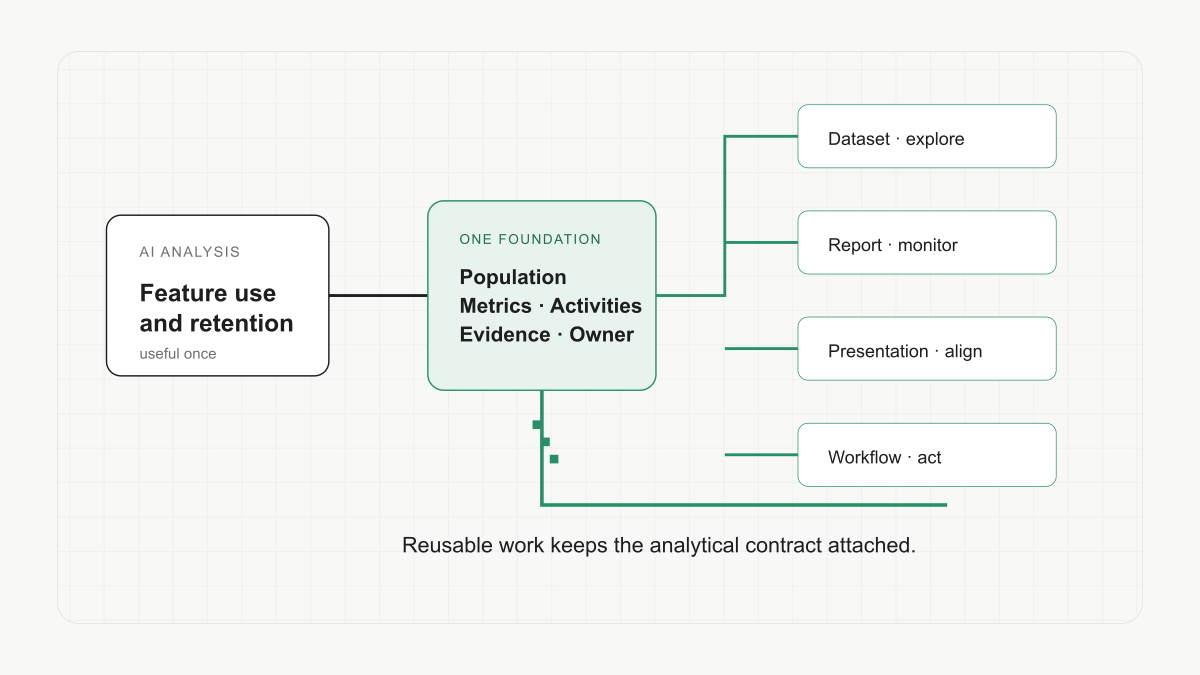
A practical path for turning useful AI analysis into a maintained Dataset, dashboard, presentation, or workflow without losing definitions and evidence.
Inside Polyform
Product updates, founder arguments, practical guides, customer evidence, and the decisions behind how Polyform works.
Featured · Practical guide
A practical path for turning useful AI analysis into a maintained Dataset, dashboard, presentation, or workflow without losing definitions and evidence.
Read the piece →Latest
43 articles
Practical guide
A practical path for turning useful AI analysis into a maintained Dataset, dashboard, presentation, or workflow without losing definitions and evidence.
Practical guide
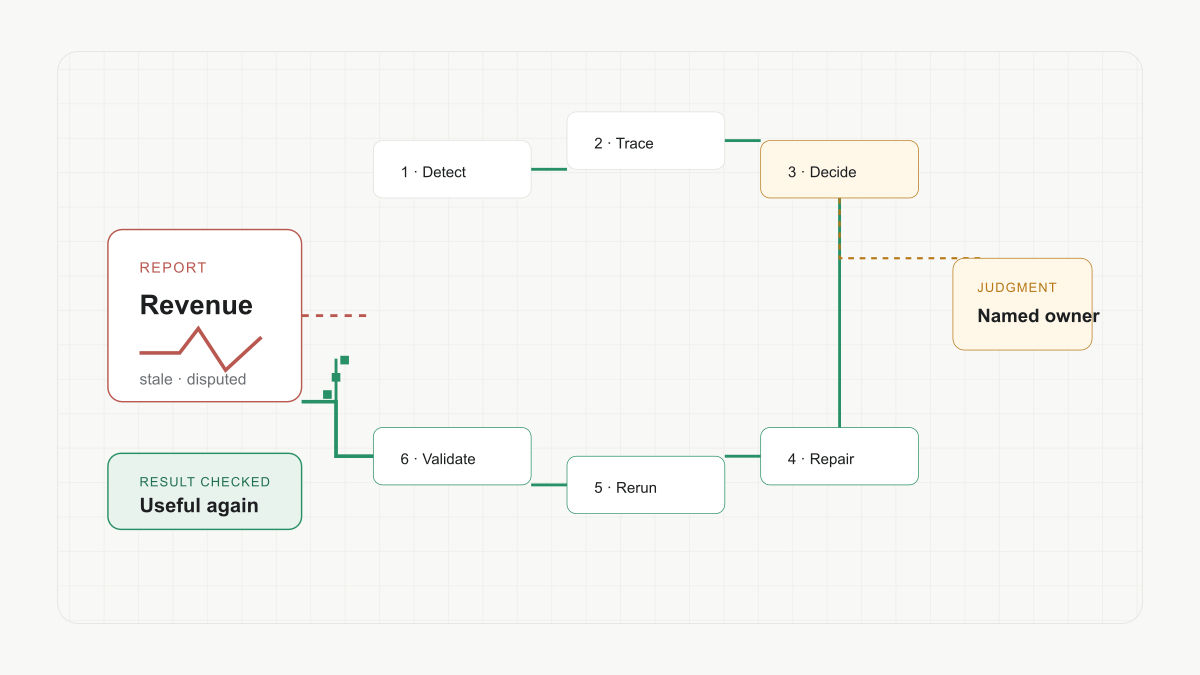
A dashboard is not repaired when AI suggests a query. Learn the closed loop from detection and diagnosis through change, rerun, validation, and ownership.
Founder argument
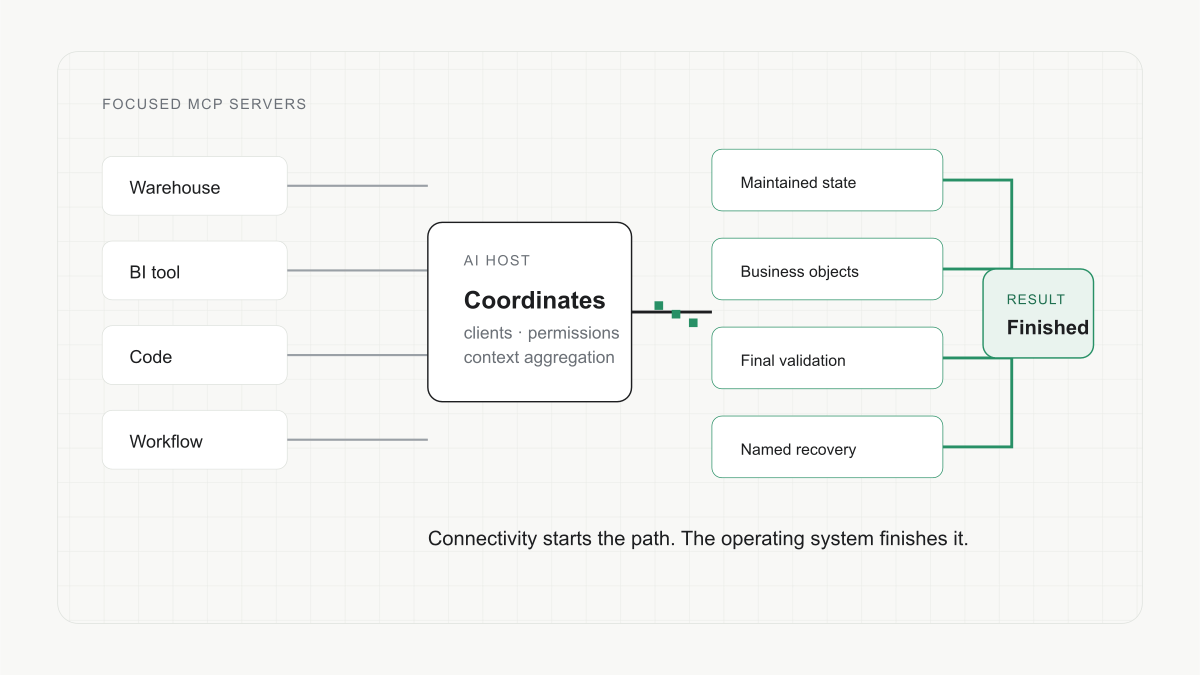
MCP gives AI focused access. Learn when to use MCP, why coding agents can investigate more deeply, and what a complete workflow still requires.
Practical guide
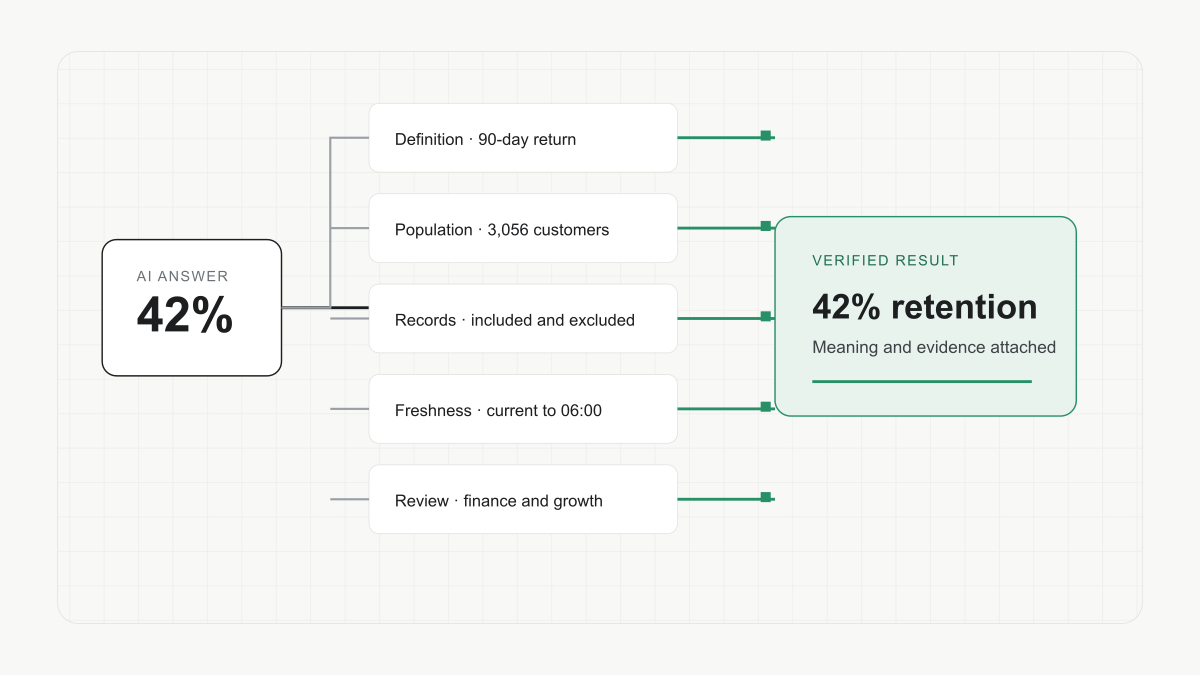
Verify an AI-generated data answer in business language, from its Metric and reusable building blocks through records, freshness, final state, and review.
Founder argument
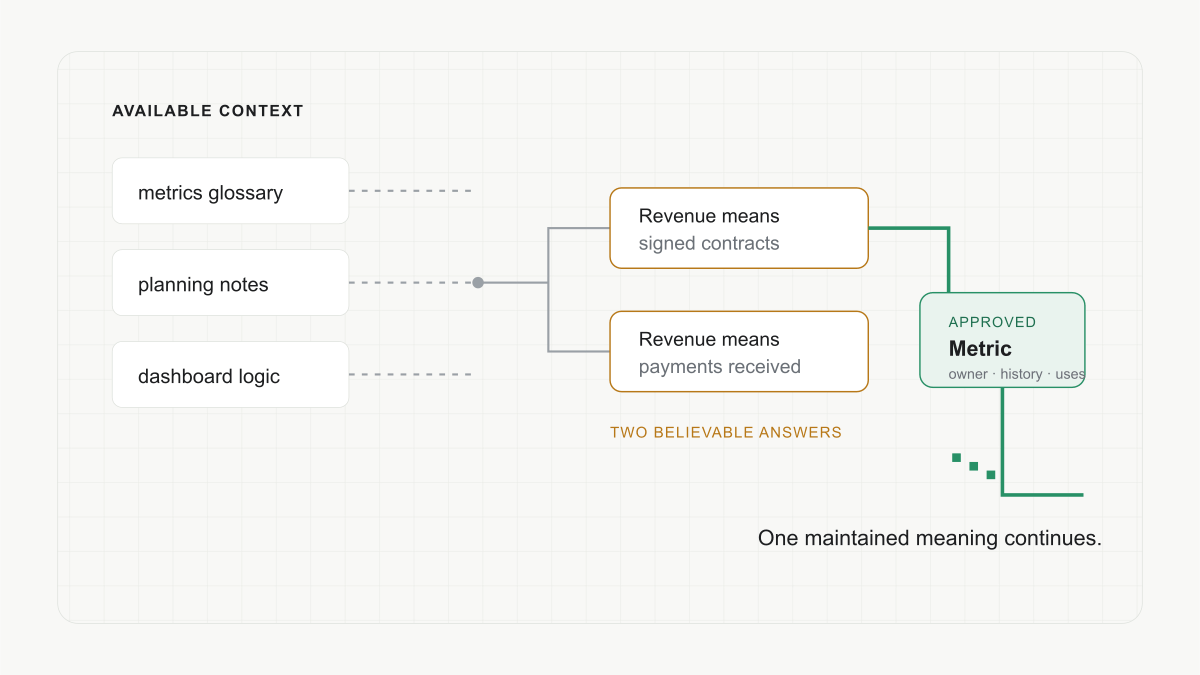
Why AI chooses the wrong business definition, and how retrieval, explainable Metrics, coding agents, and maintained context work together to fix it.
Founder argument
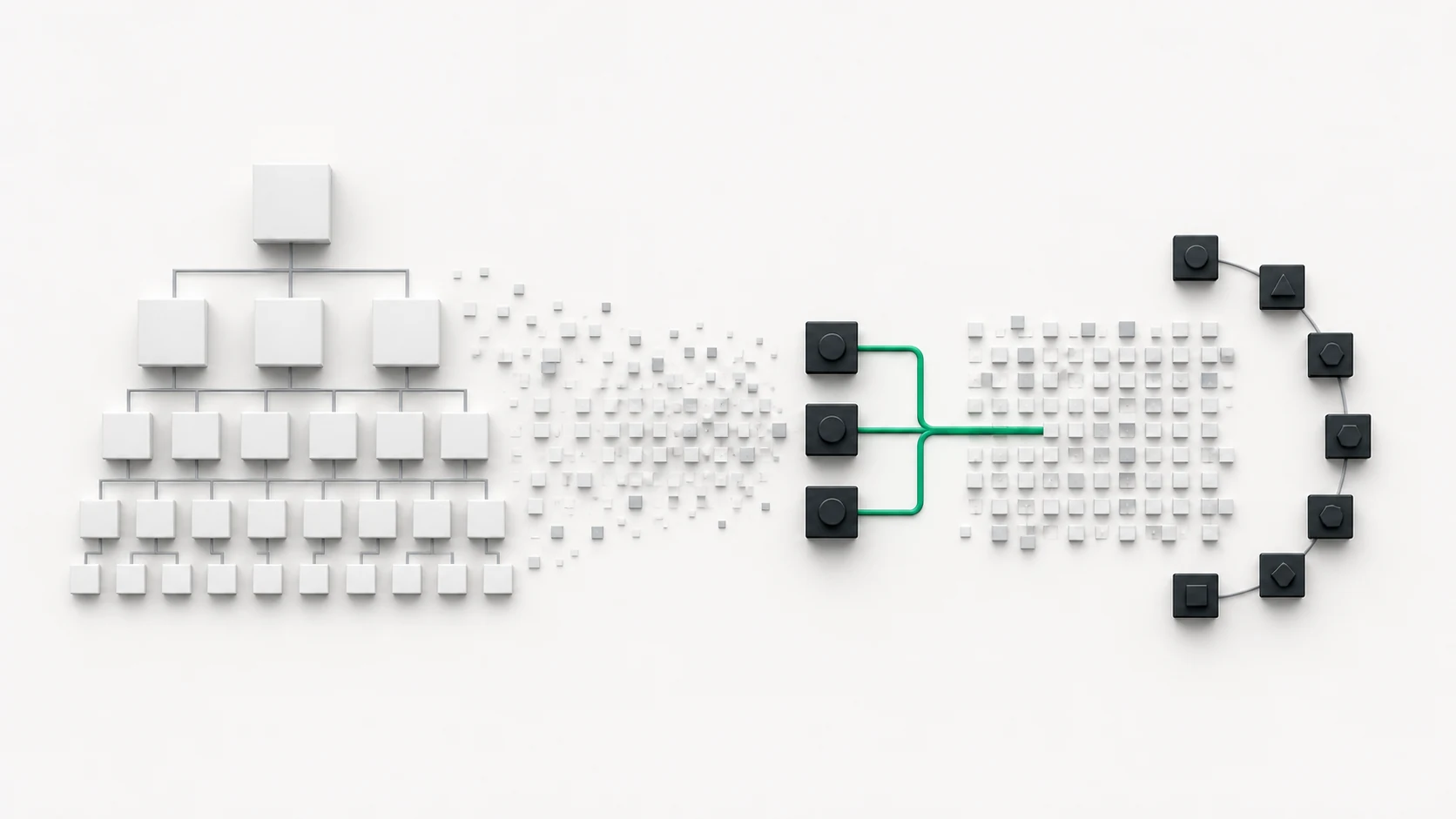
Why early startups can begin with a few senior outcome owners, use AI as execution capacity, and add expert partners before building every internal function.
Practical guide
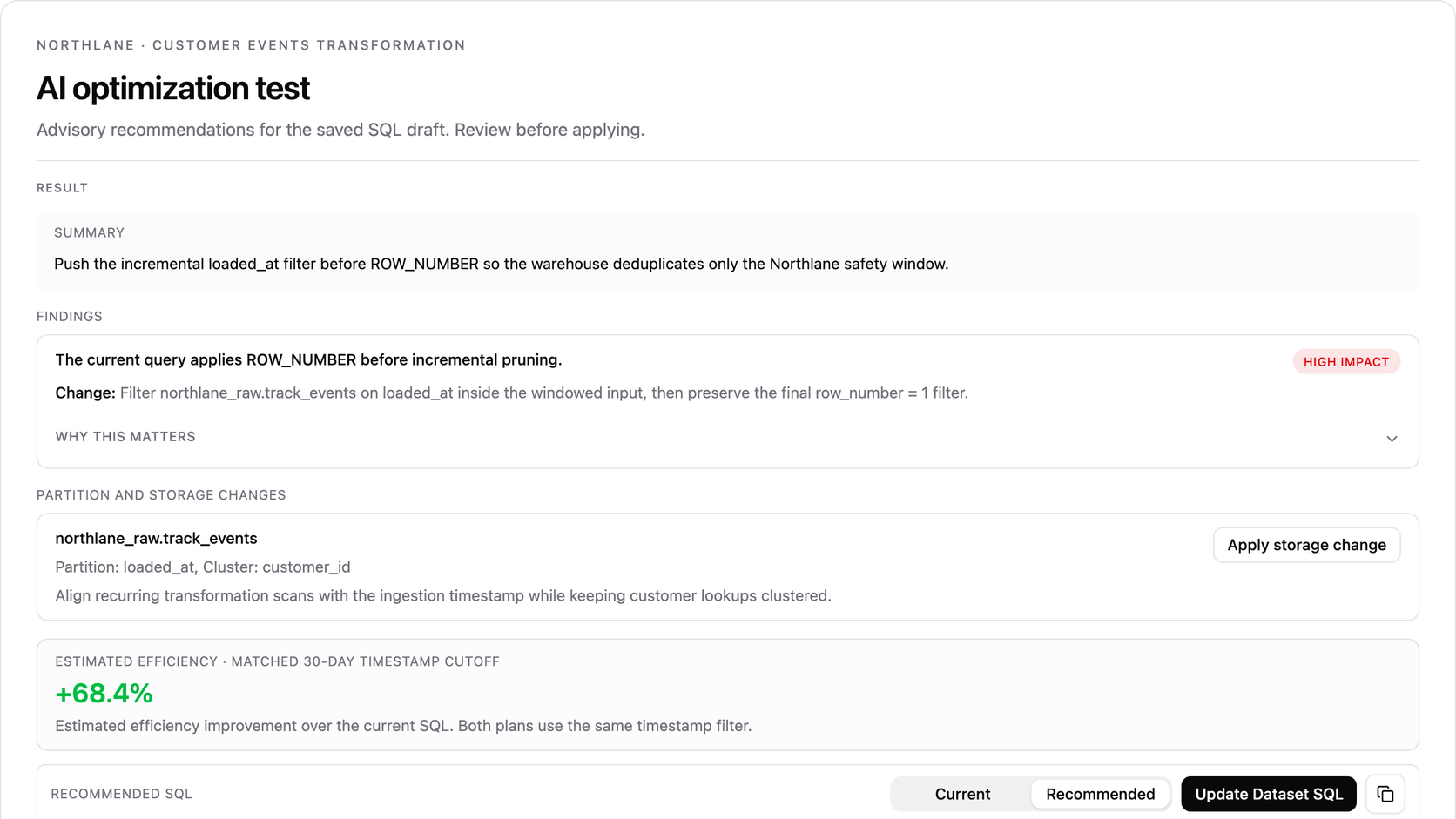
How Polyform uses validation evidence, source metadata, safe SQL rewrites, storage recommendations, and matched-window query plans to find meaningful warehouse savings.
Founder argument
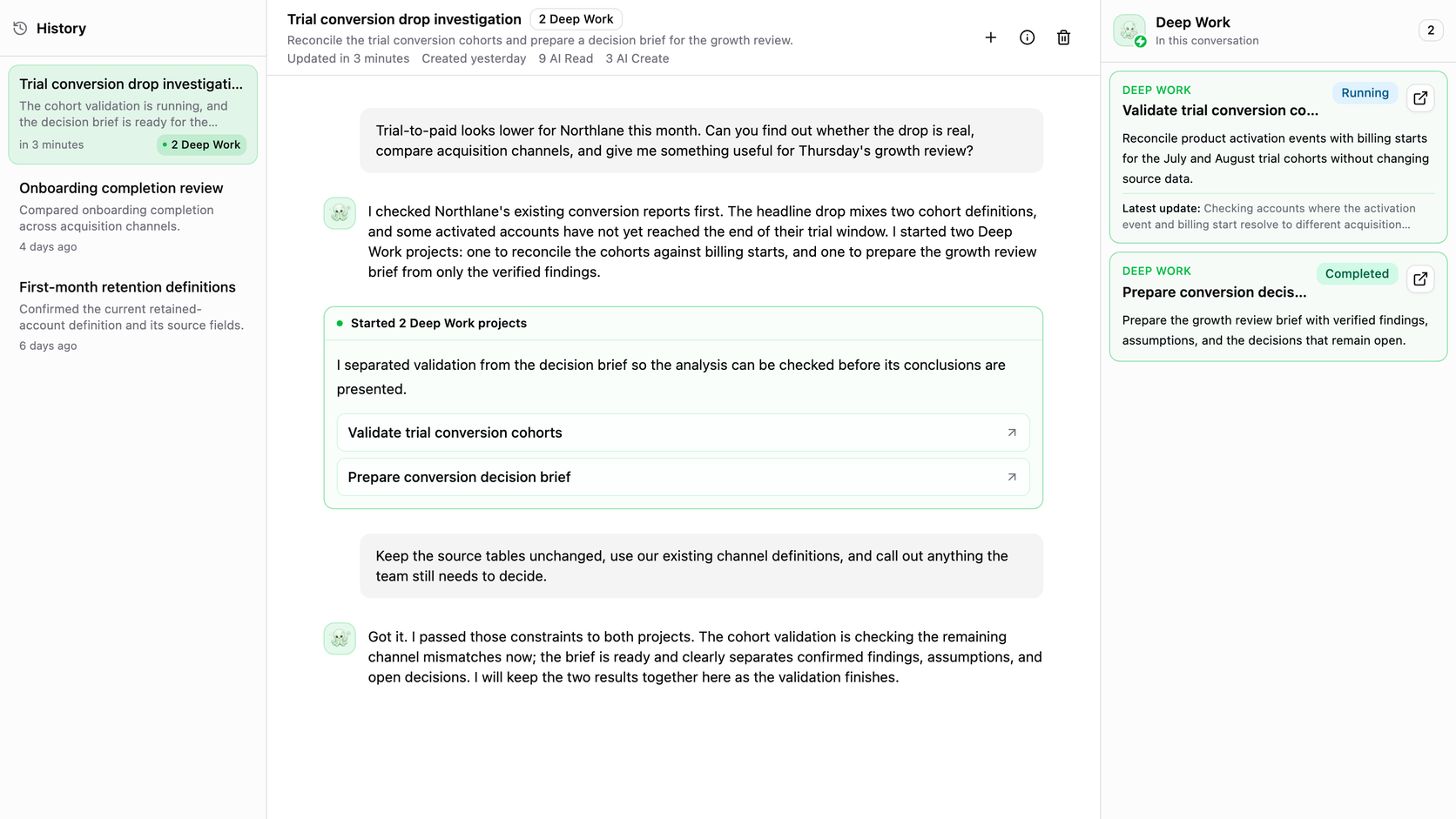
The user should state the outcome once. Chat should decide when to answer, when to start an agent, how much model to use, and when to ask for help.
Founder argument
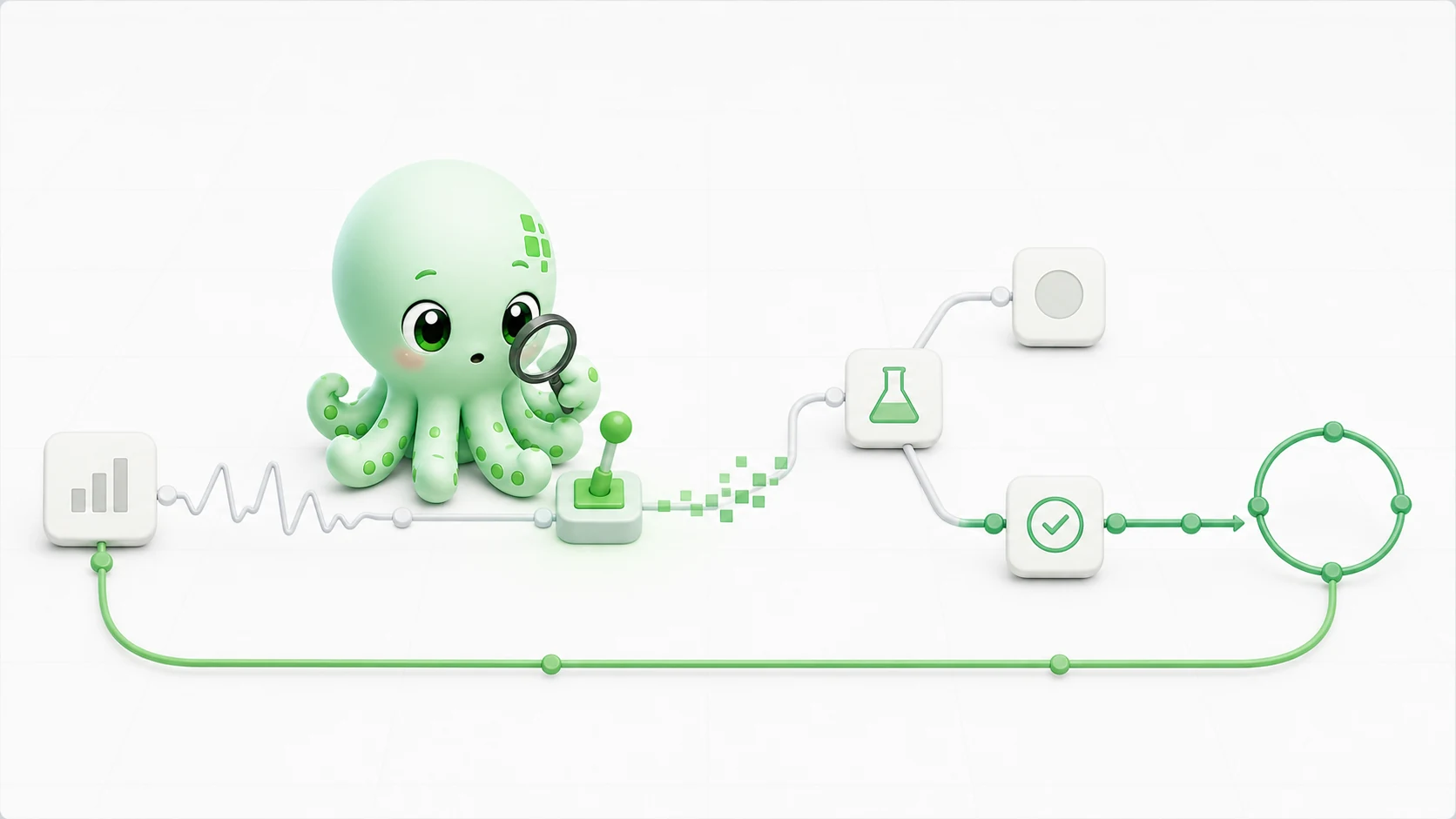
Use historical behavior to value the lever, log every change as a Dimension, and keep measuring whether the decision remains true.
Founder argument
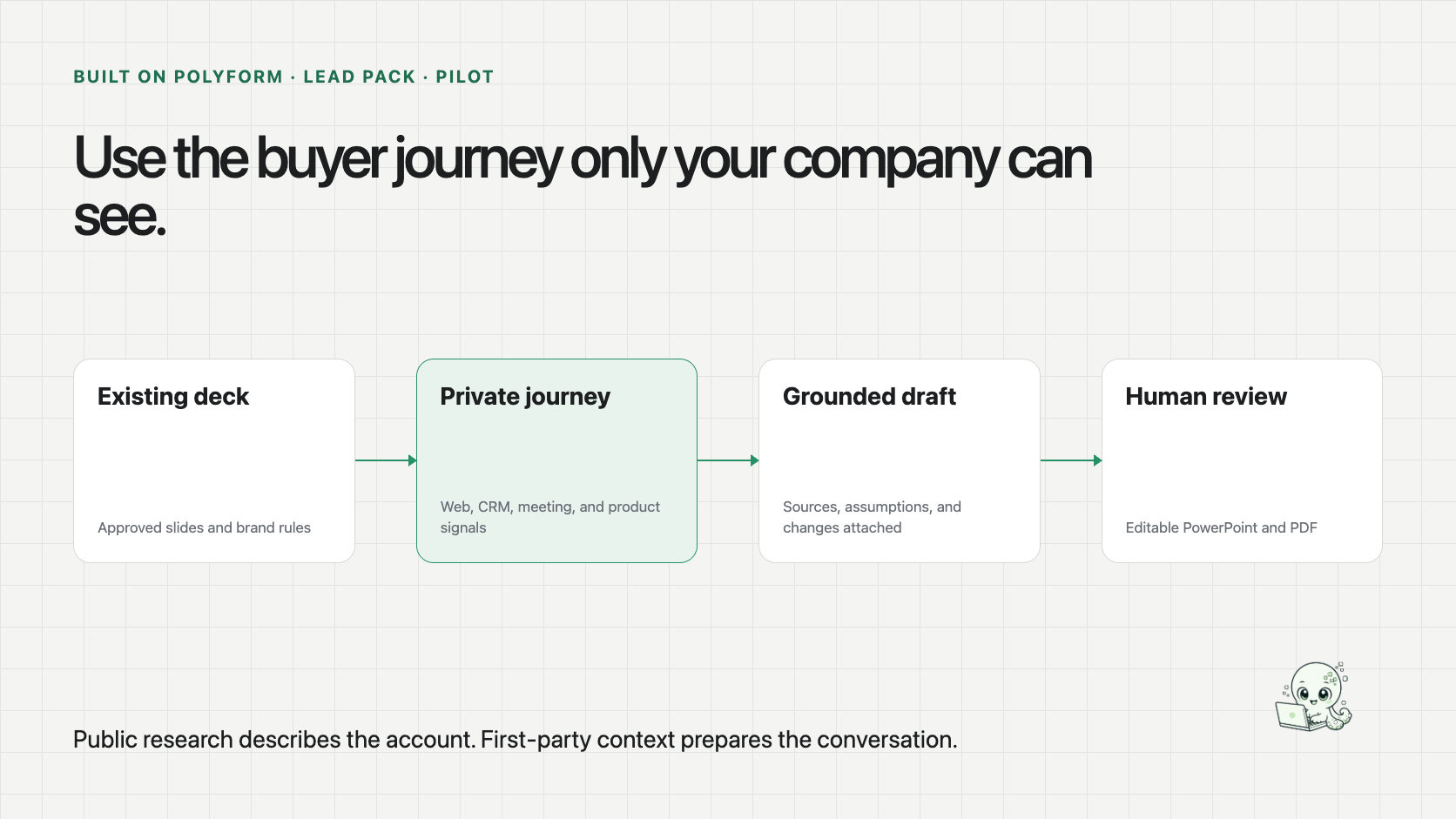
Public research can describe an account. Lead Pack uses the first-party trail only your company can see to prepare the PowerPoint your sales team already uses.
Founder argument
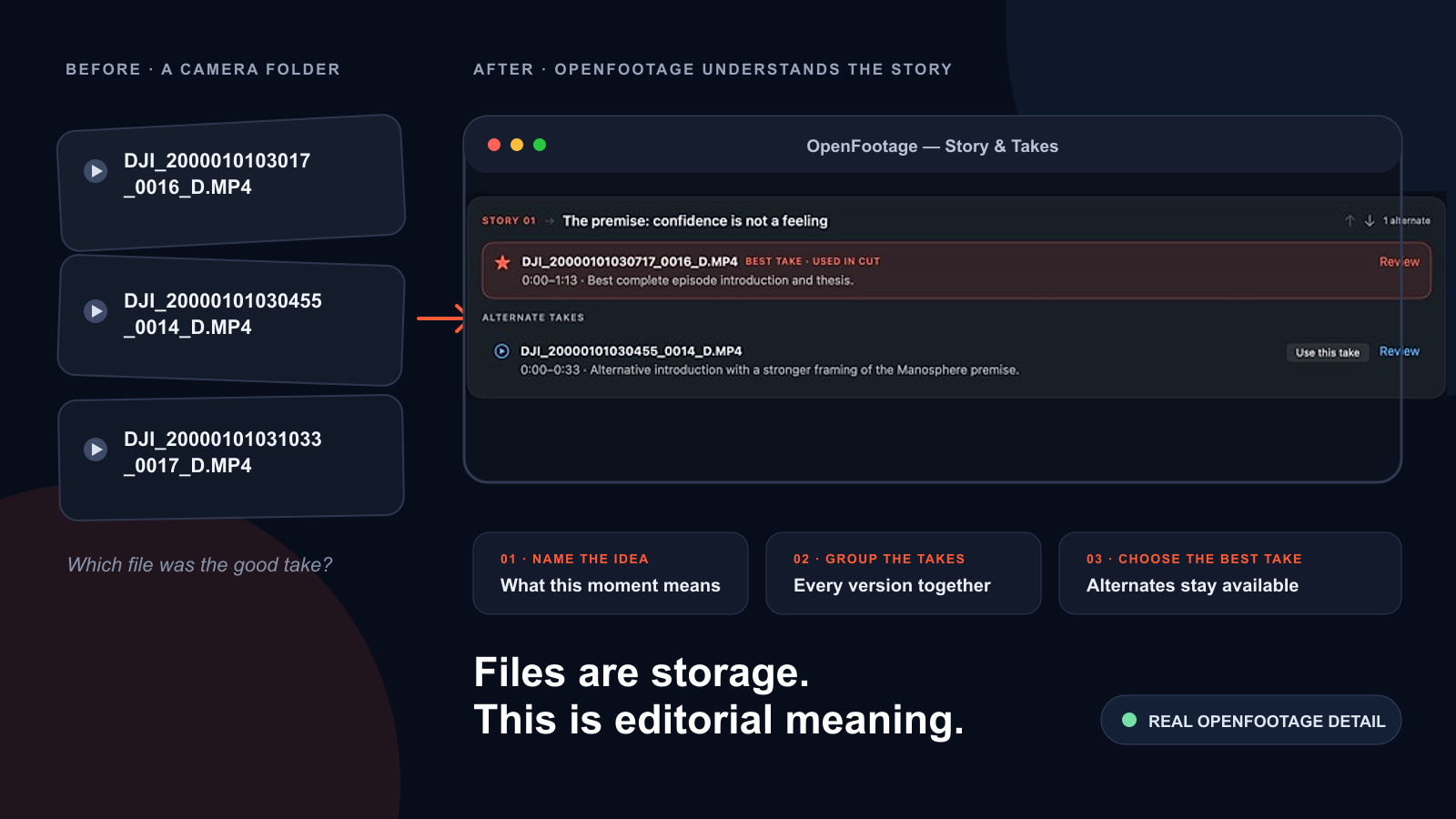
Before a Million left me sorting files, repeated takes, Shorts, and editor handoffs. OpenFootage turns that footage into a reviewable, versioned story.
Practical guide
A practical blueprint for giving AI access, analytical method, business meaning, system visibility, reusable structure, feedback loops, and escalation.
Founder argument
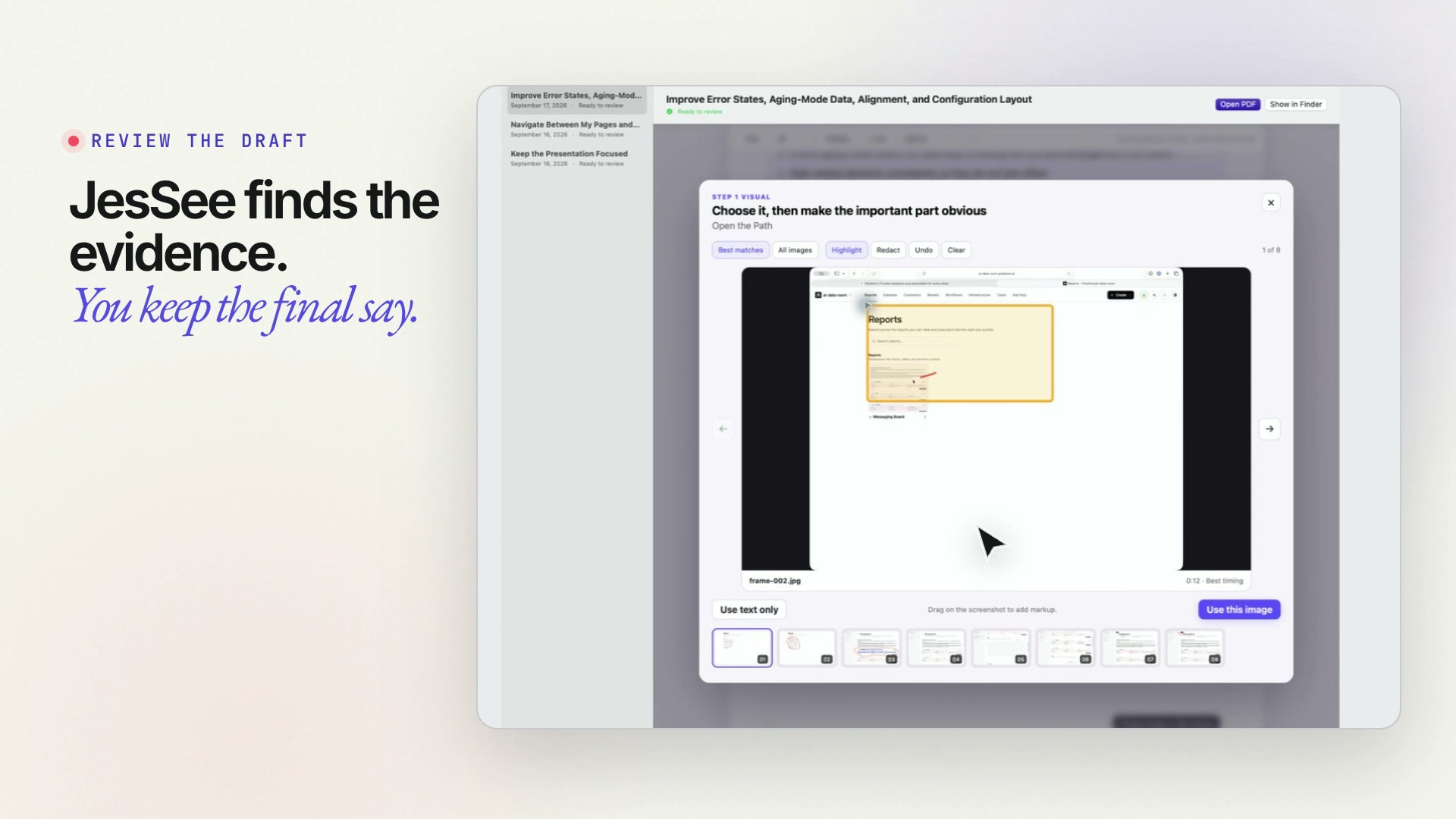
I built JesSee because a screen recording held the product context AI needed, while a pile of screenshots lost the sequence. Then I had to make it usable without API keys.
Founder argument
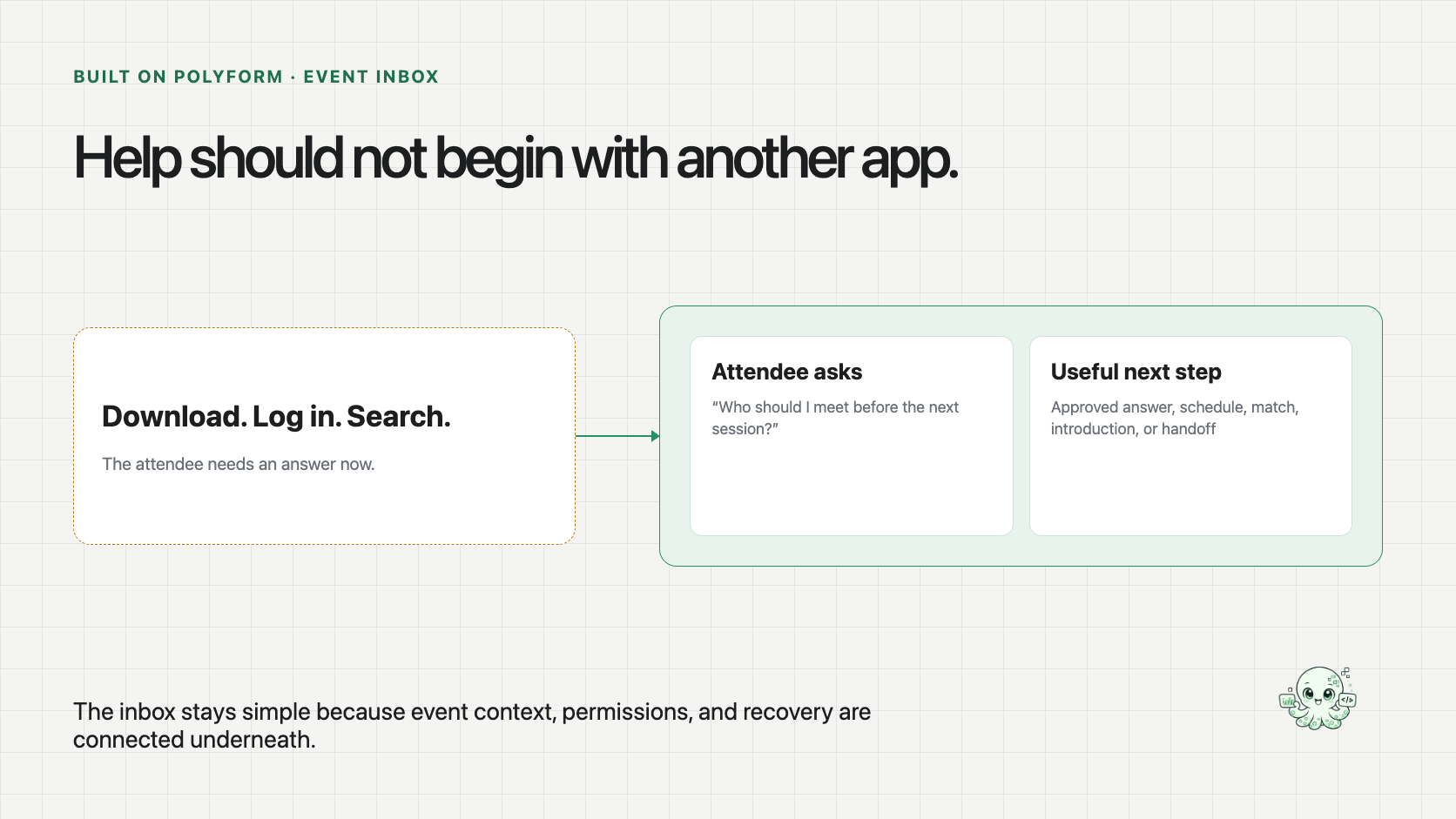
The moment an attendee needs help is the worst time to require another download. Event Inbox turns approved event context into answers over email or text.
Practical guide
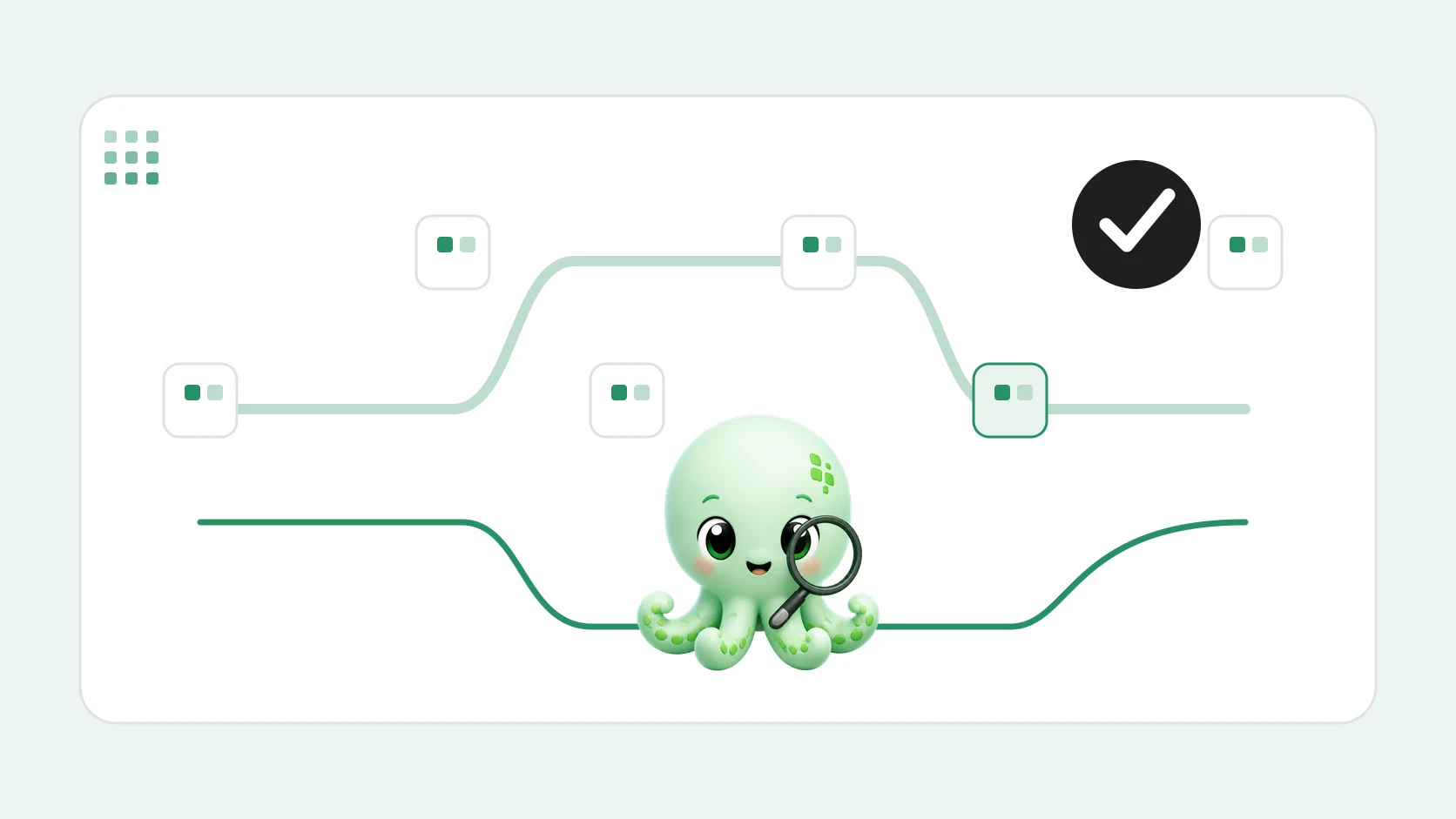
Define the job and tests before the agent starts, inspect the resulting state independently, replay known work, and measure downstream outcomes.
Founder argument
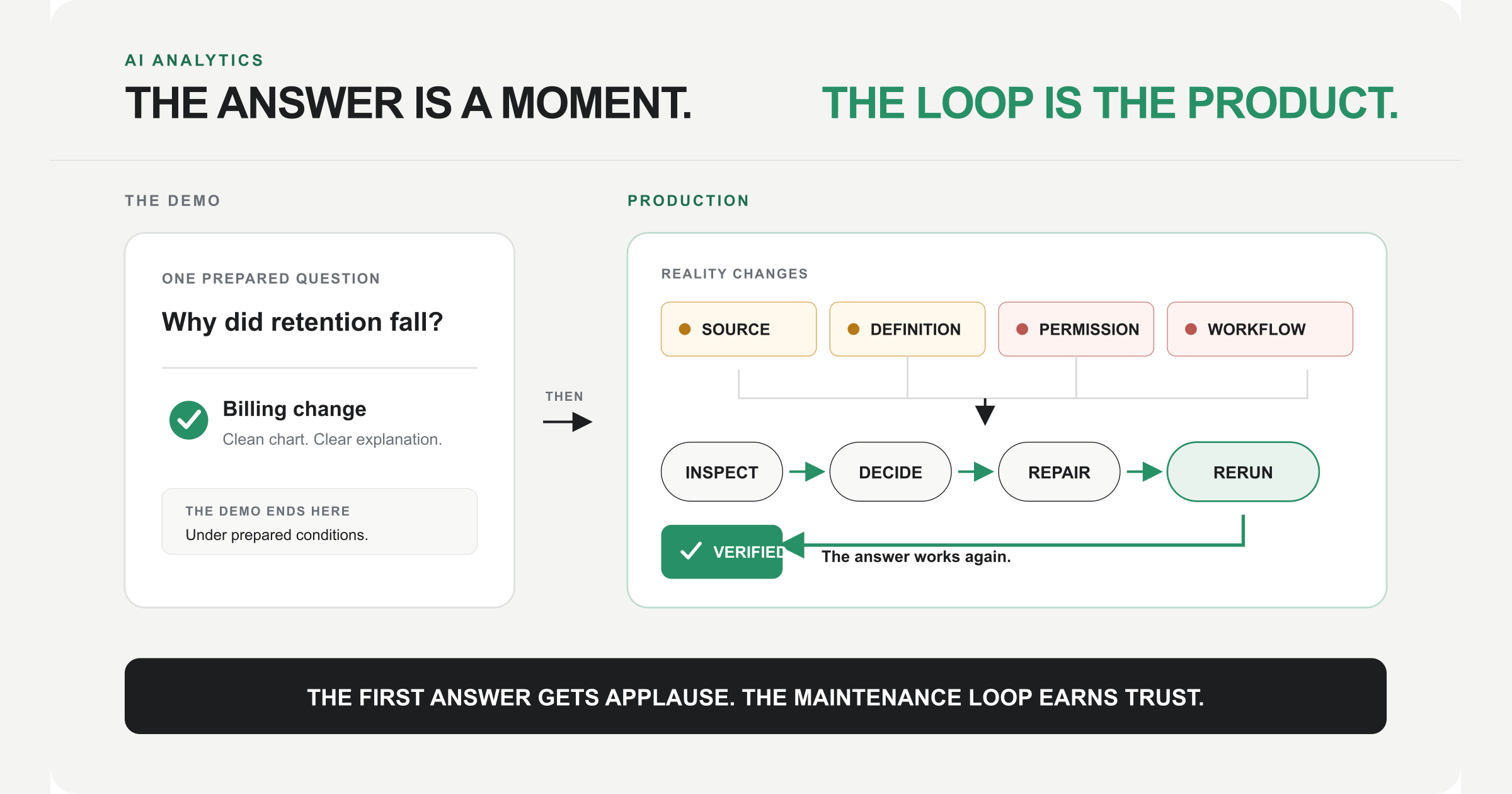
An AI analytics demo proves one answer can work. The real product keeps working as data, definitions, permissions, and workflows change.
Founder argument
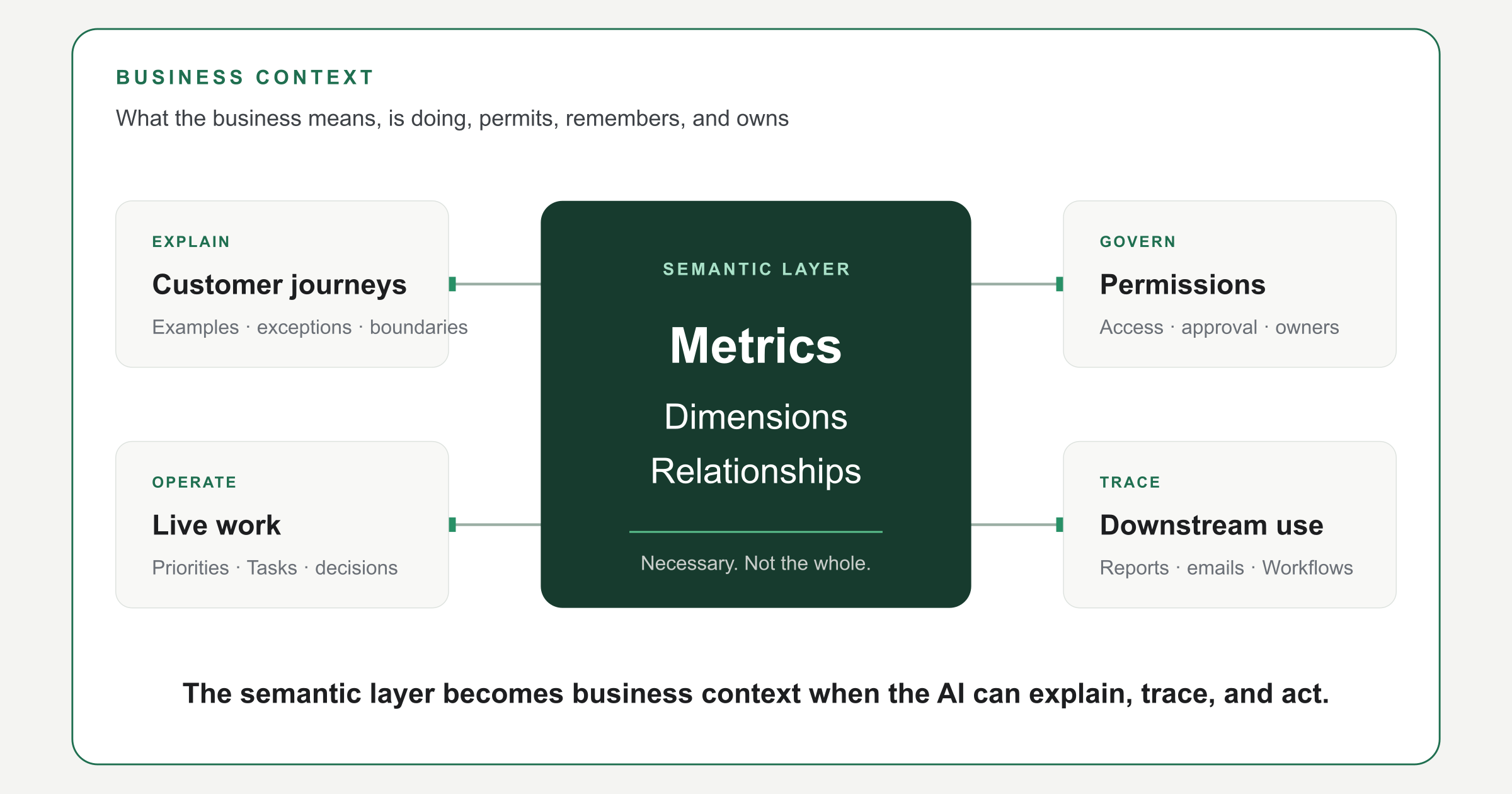
Metrics help AI use governed definitions. Business context also requires examples, priorities, permissions, history, downstream use, and accountable ownership.
Founder argument
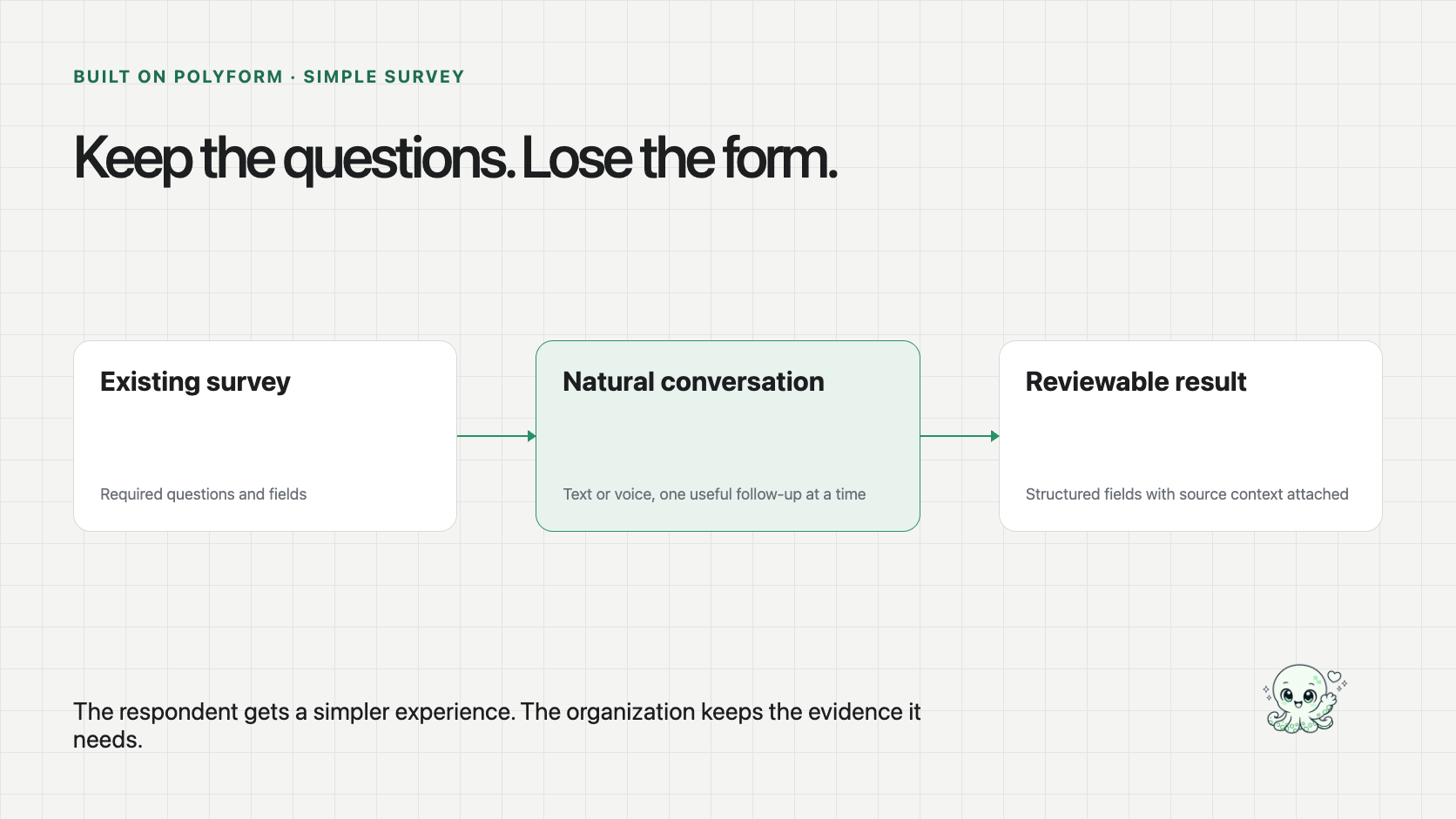
I was tired of surveys that made people decode every question and finish in one sitting. Simple Survey keeps the required fields but lets people answer naturally.
Practical guide
Why the best first data hire is usually a senior, product-minded generalist—and when building the capability before hiring is the better decision.
Practical guide
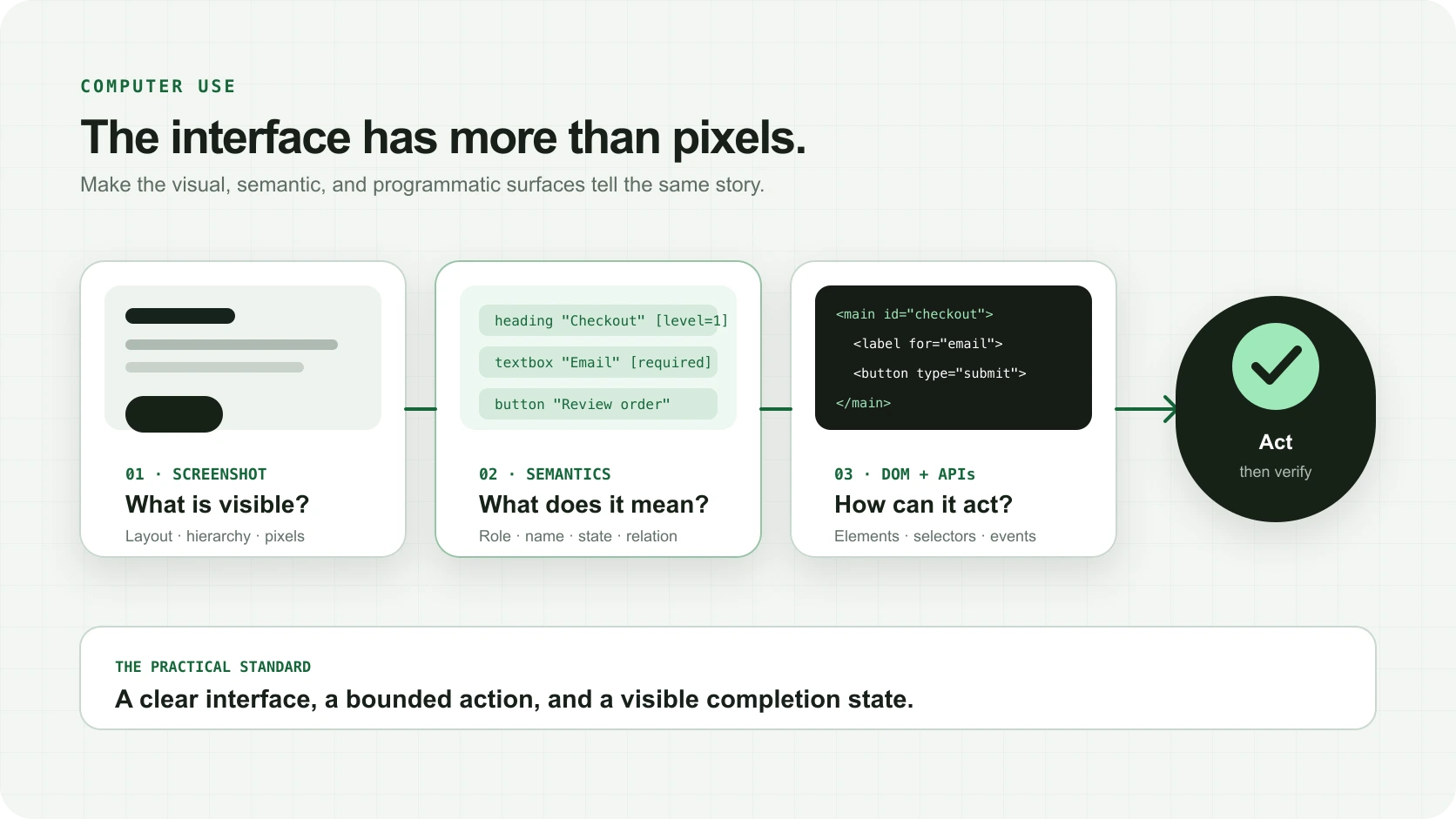
Computer-use agents can work from screenshots, the DOM, and accessibility semantics. Here is how to inspect what they receive and make your product easier to use.
Practical guide
Use Snowflake for AI analysis, reusable metrics, recurring reports, dashboards, and lightweight apps—plus the signs that you need a larger data system.
Practical guide
Warehouse access is not enough. Trustworthy AI analysis needs maintained context, shared definitions, reusable building blocks, evidence, and escalation.
Product update
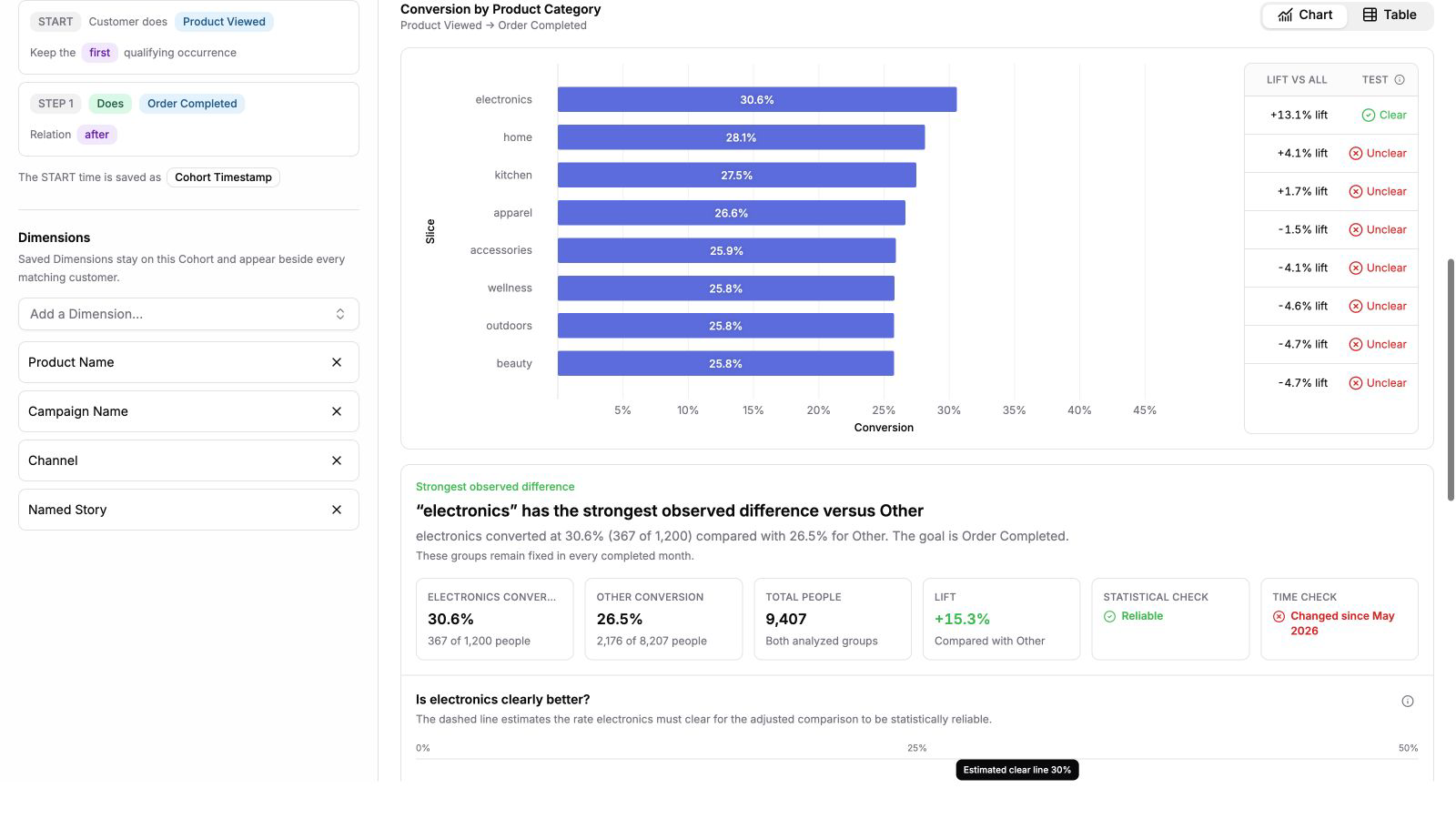
Use historical behavior when variation already exists. For new changes, log the change as a Dimension and keep measuring it through time.
Practical guide
Connect GA4 to BigQuery, use AI for reviewable analysis, save reusable logic, and power reports before buying more tools. Learn the limits.
Product update
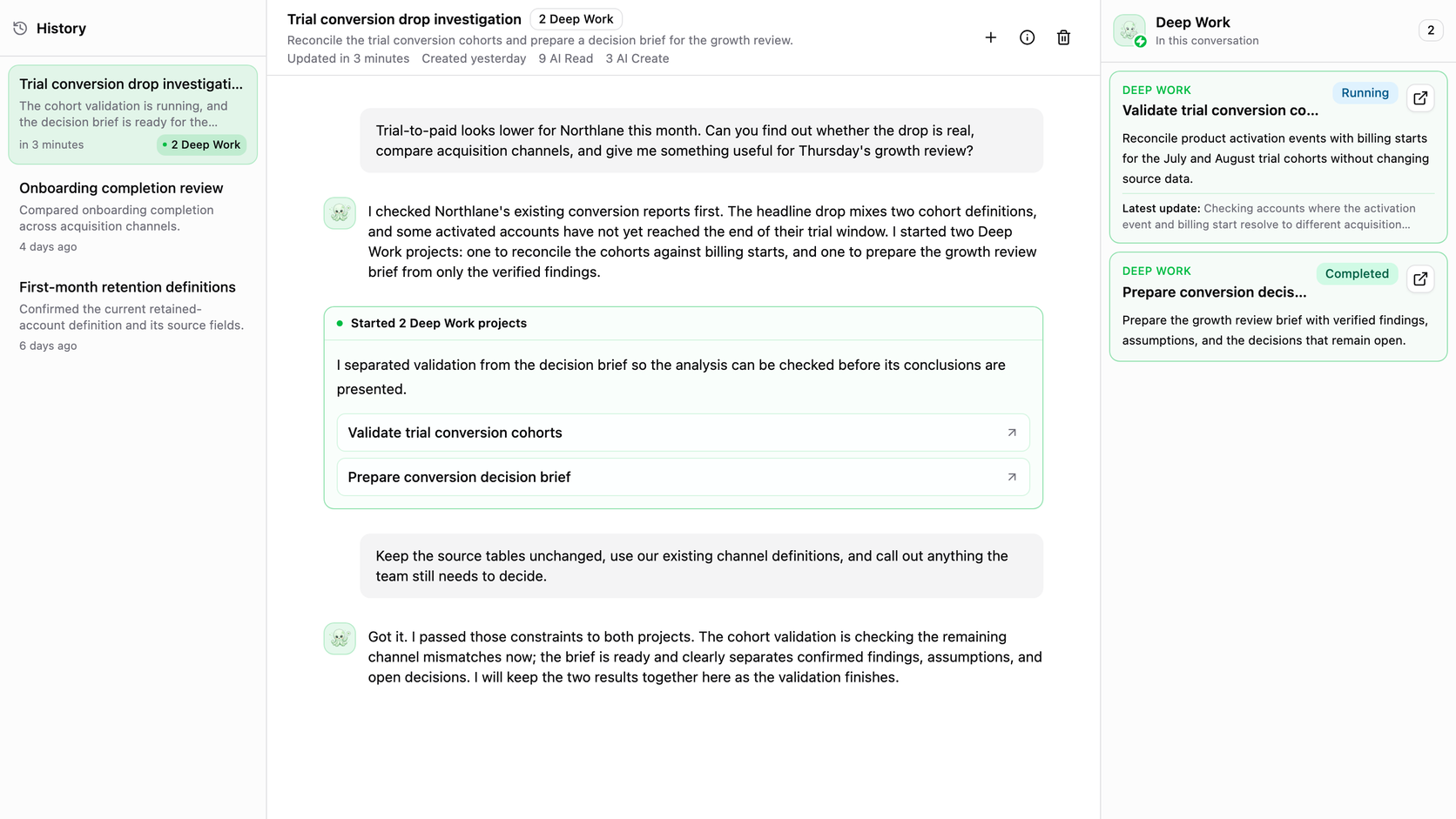
One Ask Poly conversation created a synthetic e-commerce activity layer, 28 connected product objects, and three reports—while keeping the review and remaining work visible.
Practical guide
A practical guide to how far startups can take analytics with AI, when simple connections are enough, and when accountable expertise becomes necessary.
Founder argument
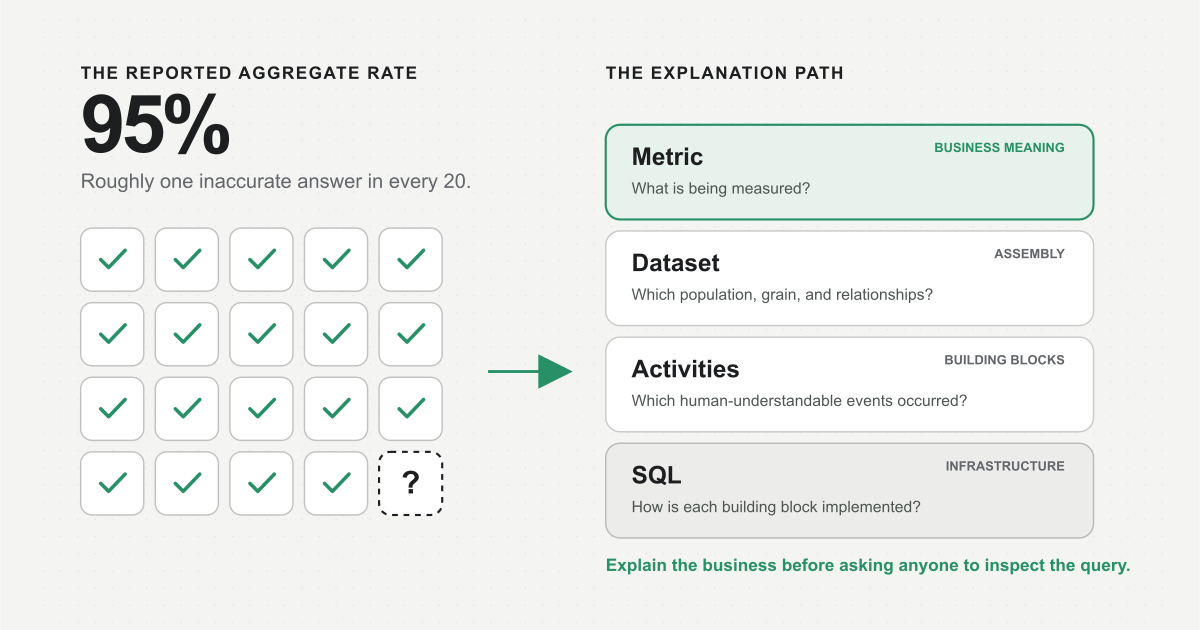
Anthropic's Claude analytics result is impressive engineering, but one inaccurate answer in 20 still needs a human-explainable path from Metric to Dataset to Activities to SQL.
Founder argument
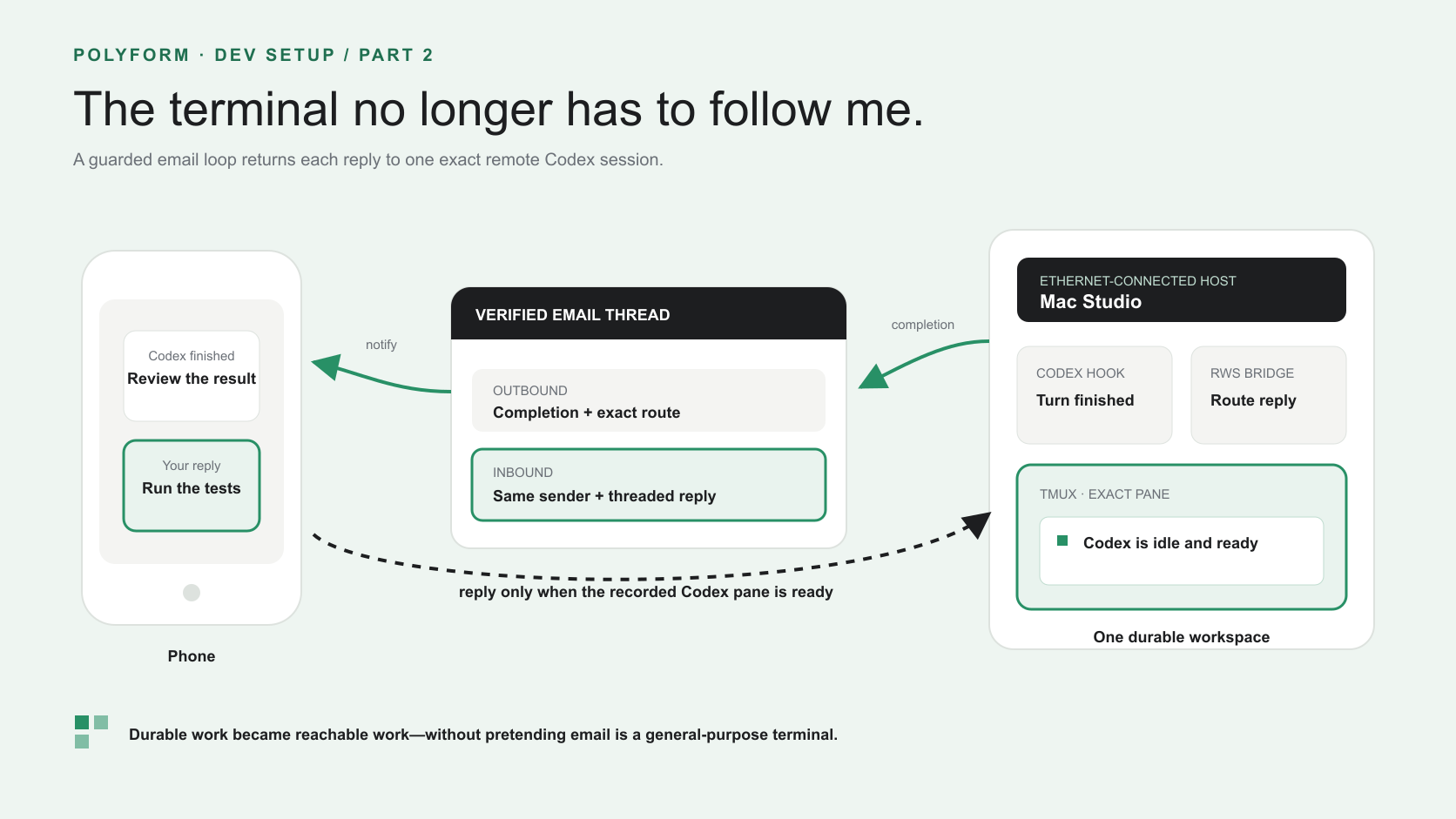
Dev Setup, Part 2: how Codex completion hooks, verified email replies, a remote bridge, and tmux let me continue an exact Mac Studio session from my phone.
Founder argument
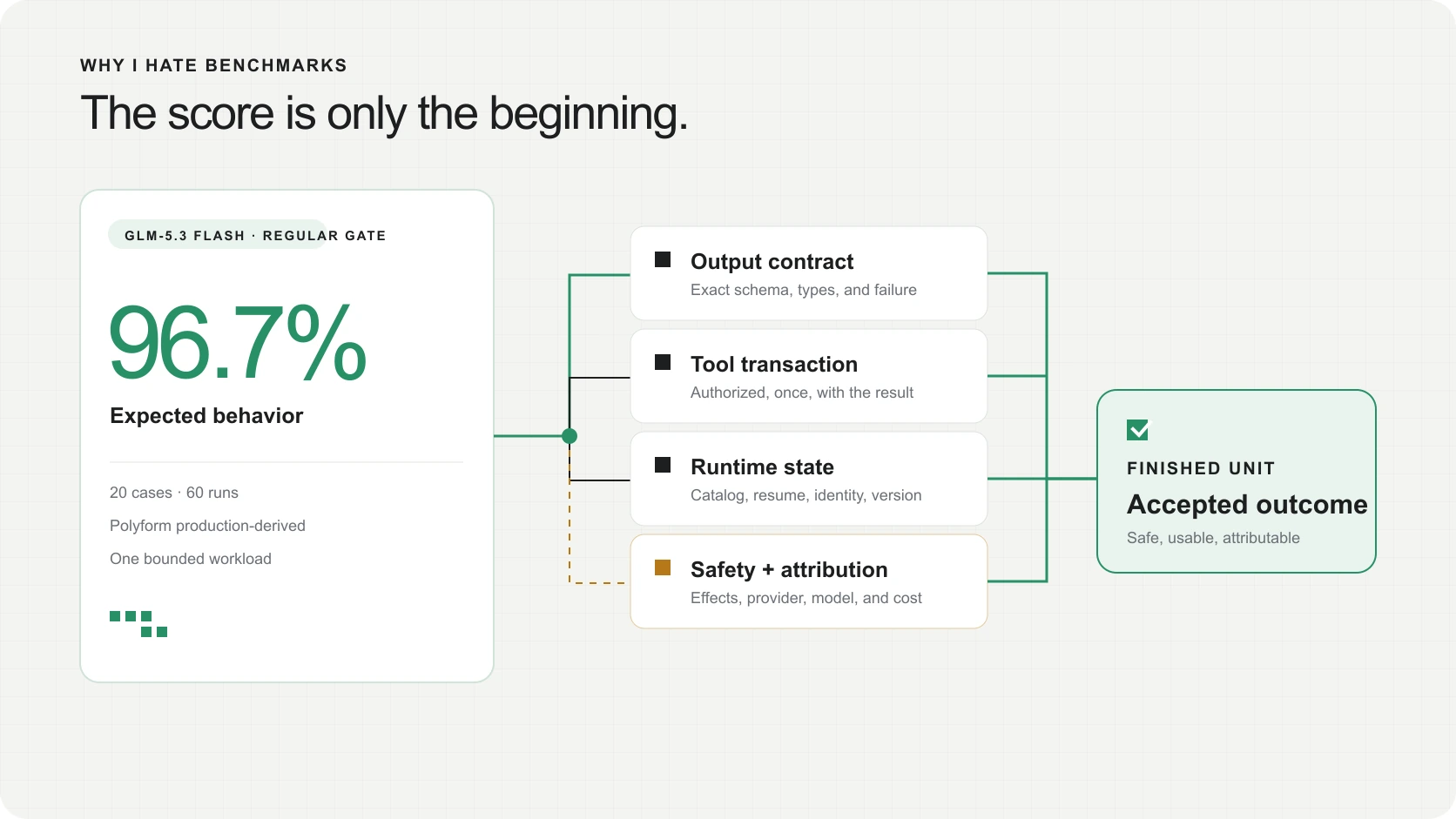
What moving a production AI workflow from GPT to GLM-5.3 Flash taught us about structured output, tool calls, OpenRouter, runtime compatibility, and cost per accepted outcome.
Founder argument
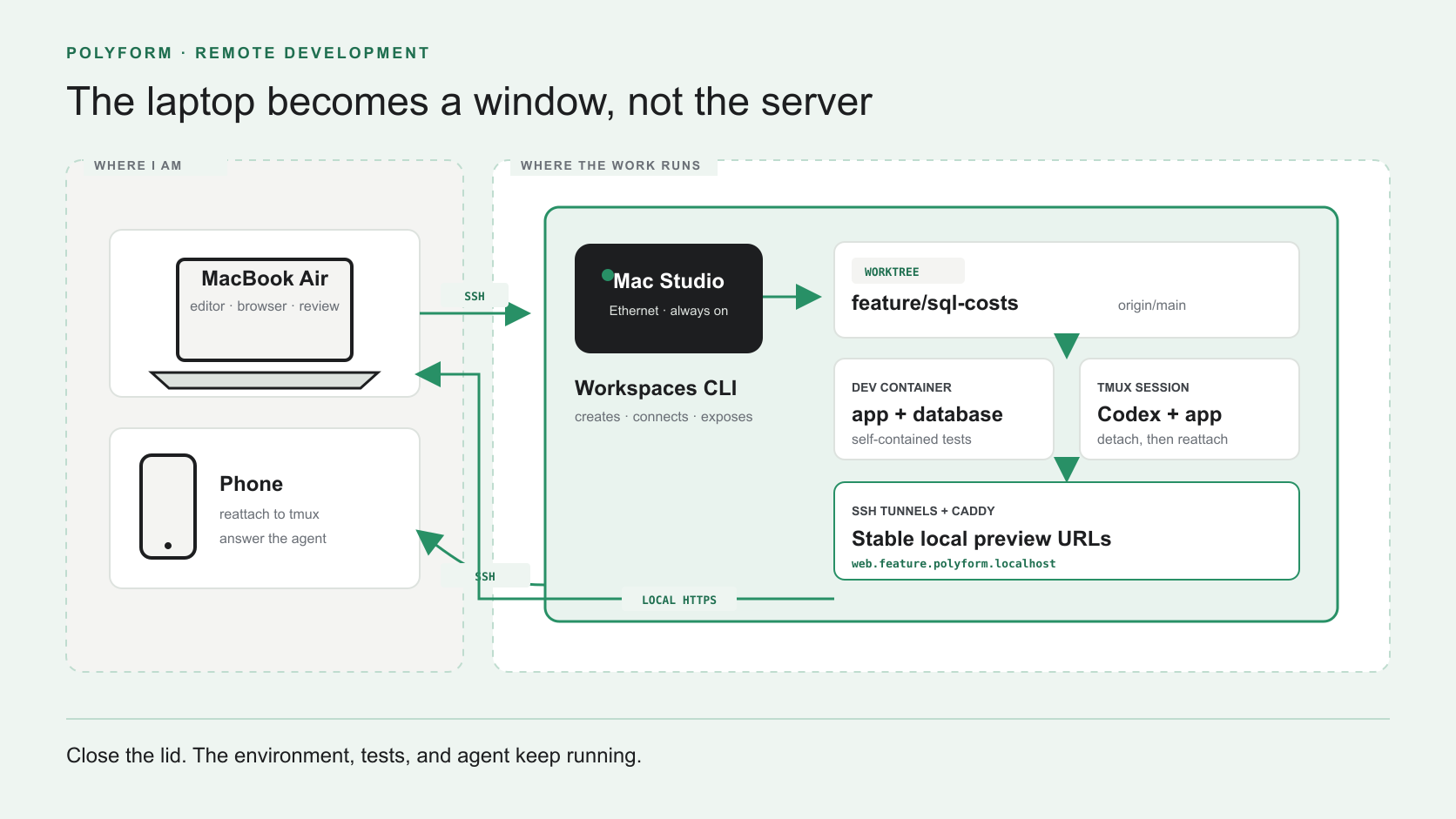
How I kept my MacBook Air, moved worktrees and containers to a Mac Studio, and built a durable remote development workflow with SSH, tmux, and Caddy.
Founder argument
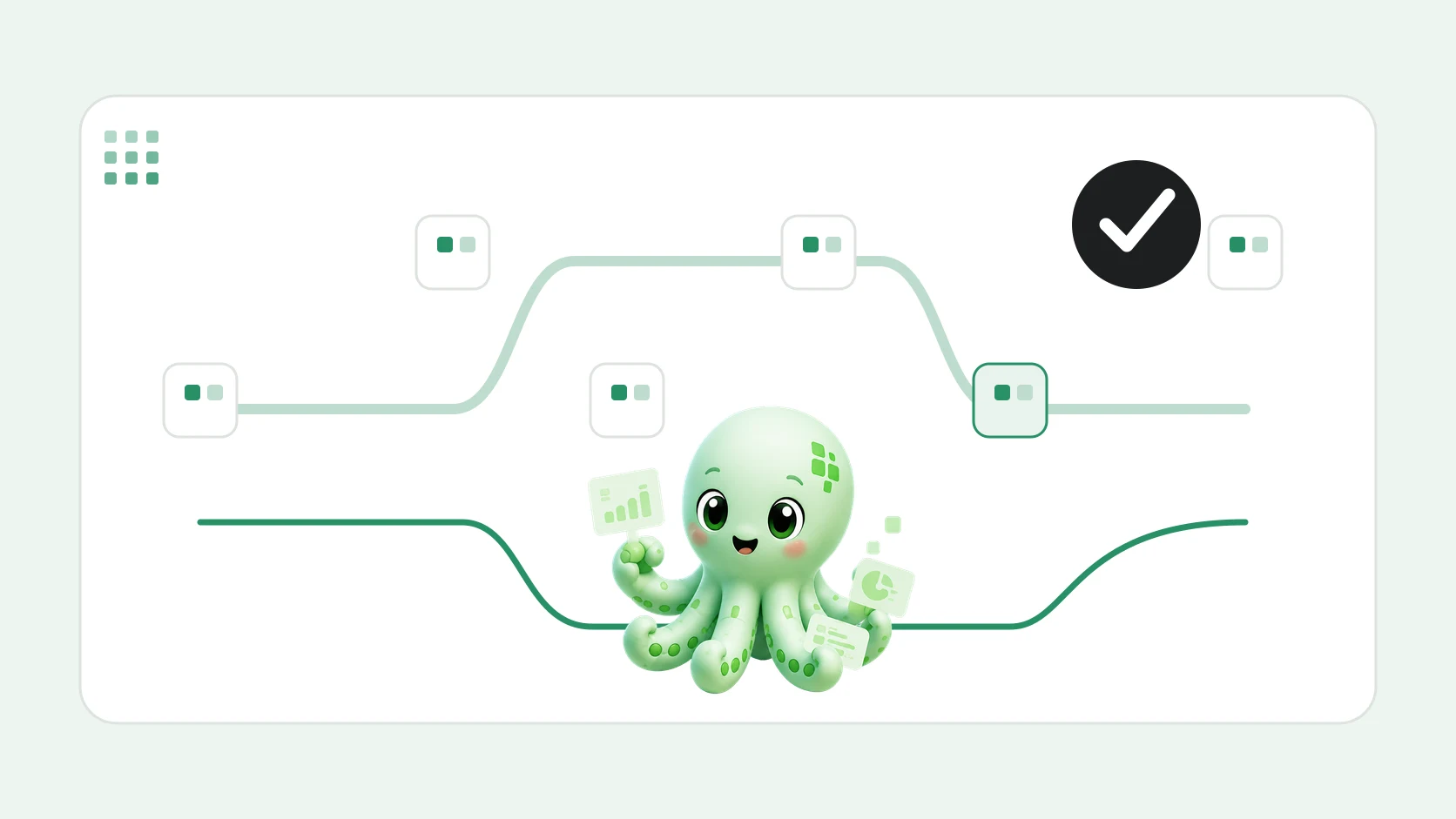
Self-service analytics evolved from spreadsheets to dashboards, customer journeys, and AI chat. The next era combines them in one repairable system.
Founder argument
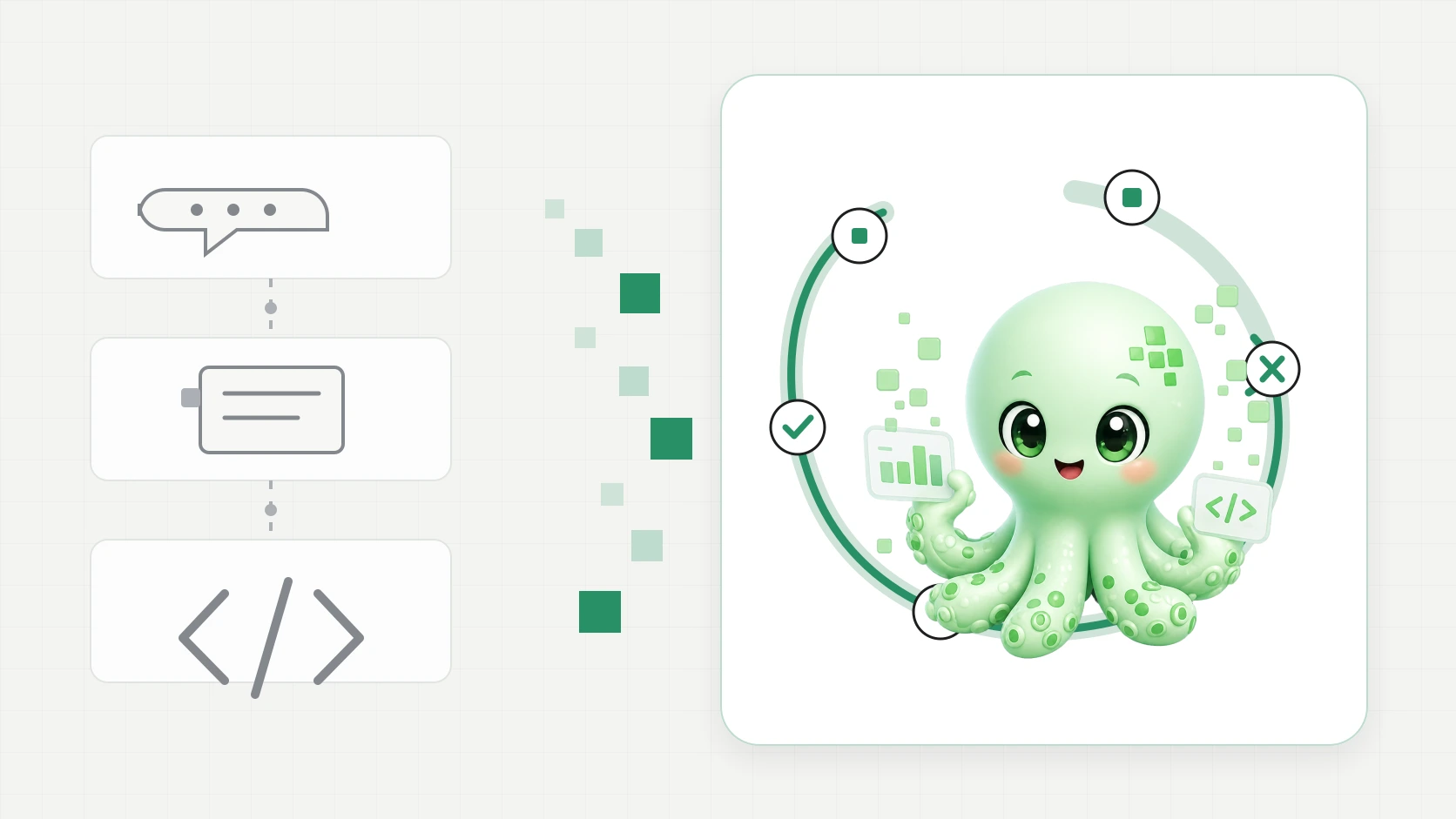
Move from ticket handoffs to outcome ownership: product experts run the customer loop while engineers and designers build the system around AI.

Practical guide
A warehouse-first plan for private equity teams modernizing service businesses: assess workflows, connect data, measure outcomes, then automate.

Practical guide
A founder's account of moving Polyform from Webflow to GitHub, Astro, and Cloudflare by giving Codex versioned source, explicit checks, human review, and a safe deployment path.
Practical guide
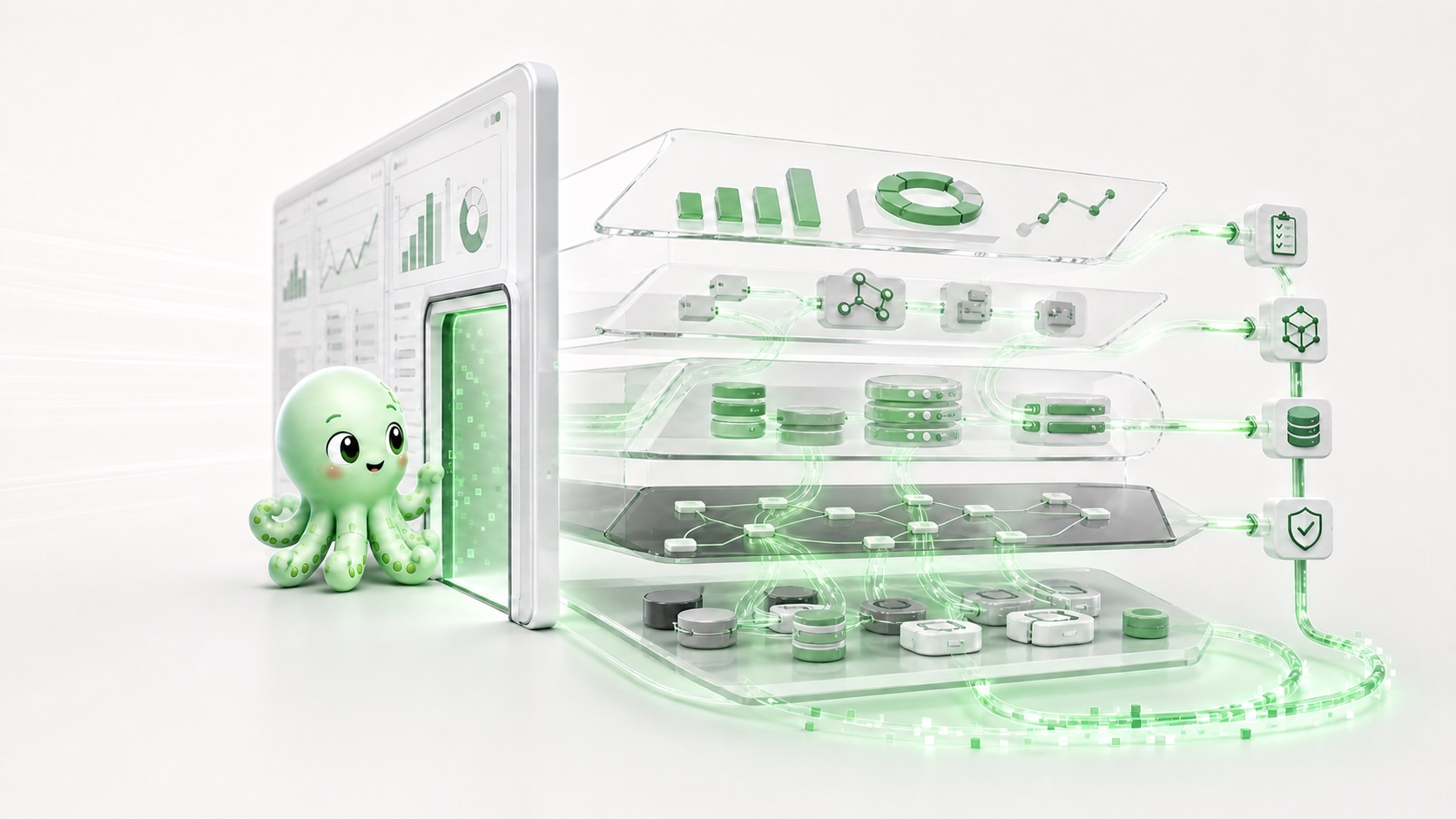
ThoughtSpot and Omni make BI better. Learn when trustworthy answers require definitions, models, sources, fixes, and ownership beyond the dashboard.

Founder argument
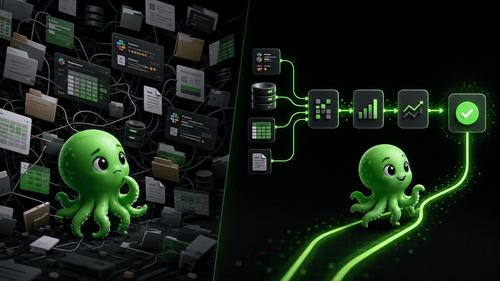
Models will keep getting better. But the next wave of valuable AI will come from giving those models the right context.
Founder argument
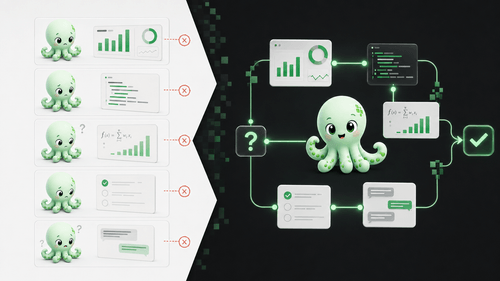
Giving an AI your entire Google Drive can produce a great demo. It does not produce understanding.
Founder argument
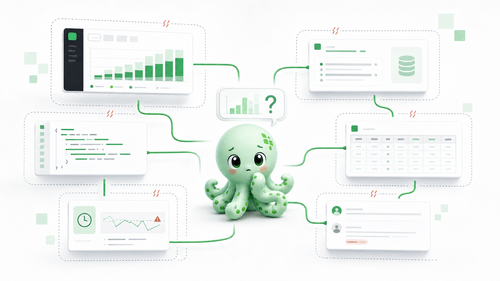
Making every app smarter is useful. It is not the same as building an AI-first system that can understand and complete the whole flow.
Founder argument
It has a data stack problem. The modern data stack was built as specialized tools. That made sense before AI. Now every tool boundary becomes a context boundary.
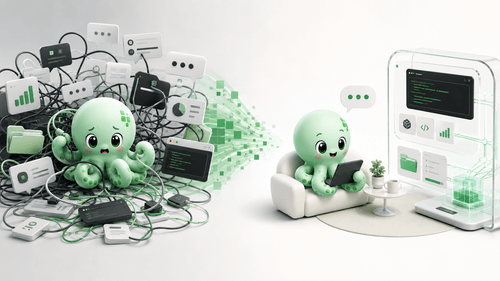
Founder argument
We tried chat, tools, a CLI, and a full computer. The breakthrough was realizing that fast conversation and deep work should not be the same system.
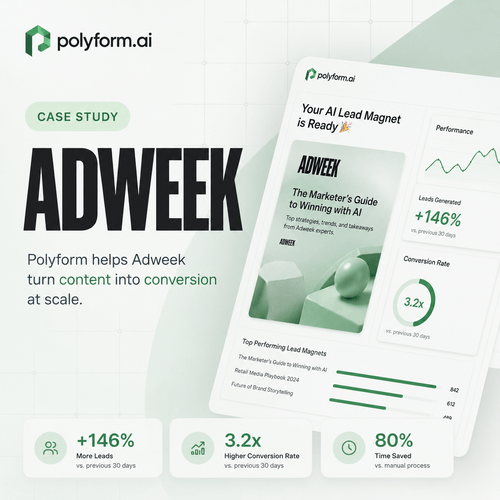
Named customer evidence
A media company replaced a broken, siloed stack with Polyform, unlocked its data in weeks, cut six figures in redundant tooling, and made fast answers to any business question the norm.
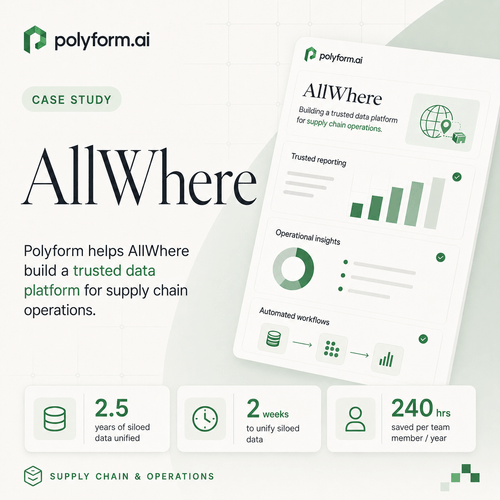
Named customer evidence
A fast-growing startup merged two and a half years of siloed data in two weeks, automated its reporting, and gave its supply chain lead his time back — with polyform.

Historical announcement
The practical and product reasons OpLevel became Polyform—and why the name fits the way we build reusable data systems.
No articles match this filter.