How to Turn AI Analysis Into a Reusable Dashboard or Workflow
Choose the durable surface first, then preserve the question, population, definitions, evidence, owner, and refresh behavior as the work moves out of chat.
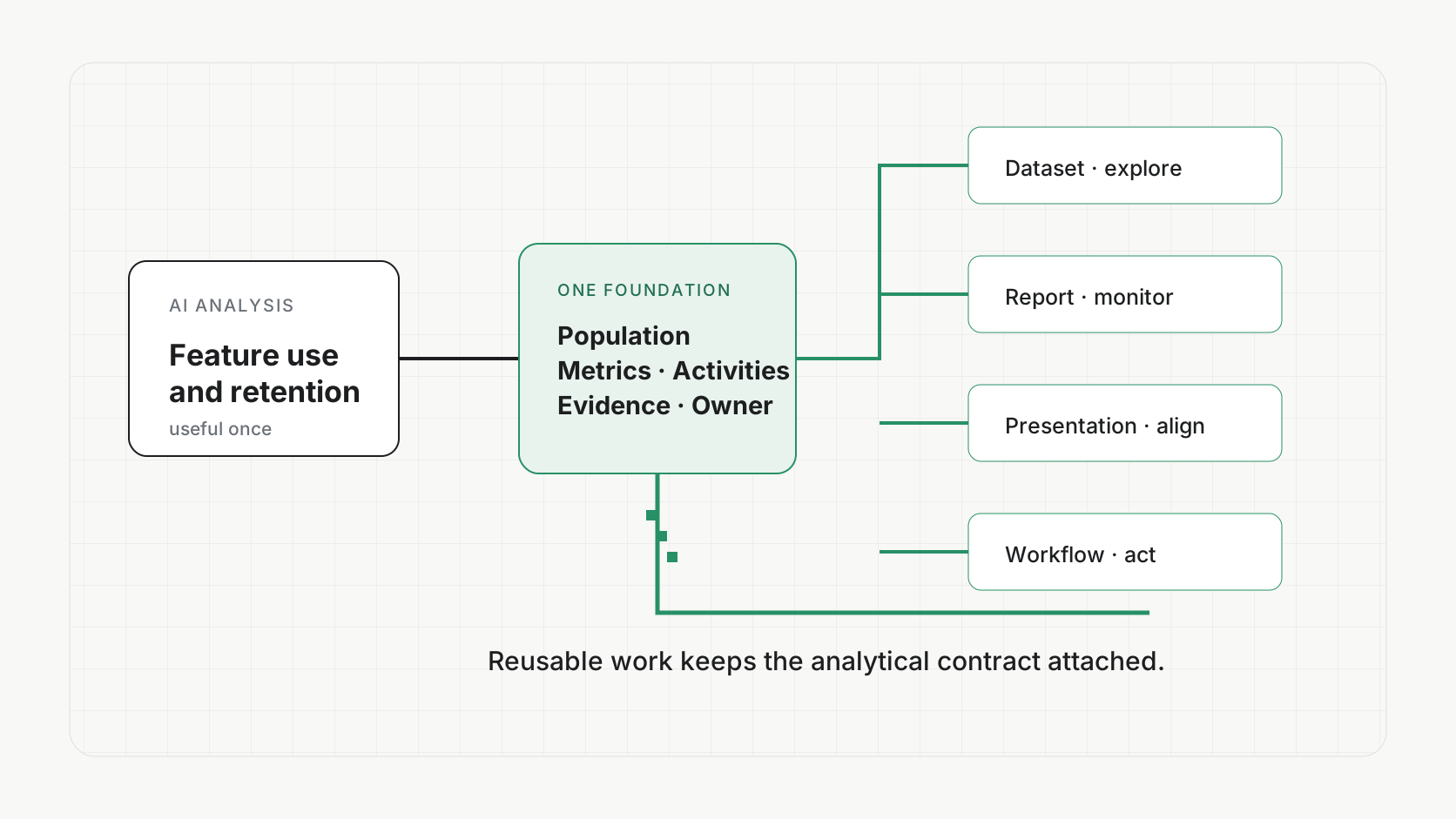
A useful AI analysis is often the beginning of the work, not the final product.
You ask whether a feature improves retention. The AI produces a thoughtful table and a plausible explanation. Now the product team wants to watch the result every week. Leadership wants a presentation. Customer success wants the at-risk accounts. Someone wants the list to trigger a workflow.
The answer is still sitting in one person's chat.
First decisionNot every answer should become a dashboard
Some work is genuinely one-time. If you need a rough answer for a private decision and will never refresh, share, filter, or act on it, leave it in chat. A document or spreadsheet may be enough.
Productionizing every exploration creates its own graveyard of dashboards and automations. The result deserves a durable surface only when the team needs to do at least one of these things:
- refresh it with current data;
- share it with people who need to explore the result;
- reuse the same population or definition elsewhere;
- monitor it on a schedule;
- turn it into a presentation or operating review; or
- take a controlled action when a condition becomes true.
One-time answer
Useful to one person now. A saved conversation, document, or export may be the correct endpoint.
Reusable company work
Other people need to inspect, refresh, filter, present, monitor, or act on the result over time.
Choose the surface that matches the job
A dashboard is only one kind of durable result. Start by asking what the next person needs to do.
- 01
Dataset or CohortExplore a population
Use when people need rows, filters, grouped views, or customer and entity histories.
- 02
Report or dashboardMonitor and decide
Use when a team needs a shared, current view with a stable Metric and drill path.
- 03
Presentation or documentExplain and align
Use when the result needs a narrative for leadership, a board, or another stakeholder.
- 04
WorkflowDeliver or act
Use when a reviewed condition should produce a recurring message, Task, export, or approved external action.
The strongest system lets several surfaces reuse one maintained analytical foundation instead of copying the logic four times.
Preserve the analytical contract before you transfer anything
Most drift happens because the team copies the conclusion but not the contract that produced it.
A table moves into a spreadsheet. Someone rebuilds a chart in the BI tool. An analyst re-creates the population for an automation. The names stay the same while the filters, windows, grain, source authority, and assumptions change.
Before building the durable surface, record:
- the exact question and decision;
- the population and row grain;
- the approved Metrics, Dimensions, and qualifying business events;
- the time window and comparison method;
- the source authority, freshness expectation, and processing path;
- the evidence and representative records behind the conclusion;
- the owner, reviewer, and permitted audience; and
- what must happen when the result is stale, disputed, or wrong.
This is the difference between saving an answer and saving reusable work.
ProductionizationUse a six-step path from chat to operation
Name the durable use and owner.
Record the analytical contract.
Build reusable population and definitions.
Create the Report, Dataset, artifact, or Workflow.
Refresh and inspect the real surface.
Schedule, review, repair, and improve.
The model step matters. Do not automate a one-off query merely because the AI wrote it. Extract the reusable population, Metric, Dimensions, and business events first. Otherwise the workflow will repeat the original ambiguity faster.
The validation step matters too. A refreshed query does not prove the dashboard, presentation, or destination received the correct result. Inspect the surface the user will consume.
A concrete example: from feature question to operating workflow
Suppose the product team asks whether customers who adopt a new feature are more likely to remain active after 90 days. The first AI analysis may be a useful exploratory comparison. Turning it into durable work requires separating what should be reused from what was only part of the exploration.
- 01
Reusable building blocksThe shared meaning
Eligible account, first feature use, active at day 90, plan, acquisition source, and the observation window.
- 02
DatasetThe inspectable population
One row per eligible account with adoption timing, retention state, dimensions, and evidence behind inclusion.
- 03
ReportThe recurring decision surface
Weekly adoption and retention views by plan and acquisition source, with freshness and drill-down.
- 04
WorkflowThe controlled action
Create a review Task for qualifying accounts or send an approved list only after the current Dataset passes checks.
The Report and Workflow should reuse the same Dataset and definitions. They should not independently reconstruct the original chat.
The analysis also needs an honest boundary. This comparison can show association. It does not prove that using the feature caused retention. The reusable surface should preserve that distinction instead of slowly promoting a plausible explanation into a causal claim.
Now imagine each team copies only the result. Product exports a spreadsheet. Leadership rebuilds a chart. Customer success creates its own list. The spreadsheet freezes the original population, the dashboard changes the denominator, and the workflow runs against a stale copy. Three useful artifacts have become three conflicting systems.
Copied result
Separate query, frozen export, duplicated definition, unclear owner, and no shared change path.
Reusable work
Shared building blocks, one maintained population, purpose-built surfaces, fresh runs, review, and a common repair path.
A saved conversation is not a reusable interface
Sharing the chat preserves the words. It rarely gives the next person the experience they need.
They cannot reliably filter the population, inspect the rows, open a customer journey, change the time window, compare segments, see freshness, understand which definition was used, or turn the result into a controlled action.
They also cannot know whether reopening the conversation next month will use the same analytical contract. The source data, model, definition, or prompt may have changed.
This is why I do not think longer chat memory is the answer. Memory helps the conversation continue. The business still needs durable product surfaces, owned definitions, scheduled processing, permissions, and repair.
How to build this without Polyform
A mature team can build an excellent productionization path with a semantic layer, governed notebook or modeling system, BI tool, presentation tooling, workflow engine, orchestration, version control, and clear ownership.
The key is to make the handoff deliberate:
- Promote the population and definitions into governed reusable logic.
- Build the surface from that logic instead of from copied output.
- Attach provenance, freshness, and ownership.
- Test a fresh run and inspect the final experience.
- Define the schedule, audience, permissions, and failure path.
- Review the surface when the underlying definition or source changes.
That is a real system. It may be the right investment for a company with the team and reason to own it.
The same pattern applies beyond product adoption:
- Leadership KPI: turn a one-time margin investigation into a governed Metric and a weekly Report with a review owner.
- Customer success: turn a churn-risk analysis into an inspectable cohort first, then a controlled account-review Workflow.
- Operations: turn a location-performance analysis into a recurring presentation and a Task when the evidence crosses an agreed threshold.
In each case, the durable result is not “the chat, but scheduled.” It is a product surface built from reusable business objects with an operating contract.
What Polyform changes
Polyform is designed so the exploratory conversation and the durable result can share the same maintained foundation. A useful answer can lead to a Dataset, Report, presentation, document, Task, or Workflow without treating each surface as an unrelated rebuild.
The exact product behavior remains permission- and review-bounded. Not every chat response automatically becomes a saved Report, and not every action should run without approval. The important difference is that Poly and its agents work across a connected system where Metrics, Datasets, Activities, Reports, Workflows, evidence, processing state, and work history can remain related.
The AI that does the work page explains that execution model. The Reports and Workflows pages show the two most common durable endpoints: a shared decision surface and a controlled operating action.
I wrote the broader product thesis in Dear AI Chat: Stop Making Us Choose Between Chat and Work. The user should state the outcome once. The system should decide whether the right result is an answer, durable execution, a reusable product surface, or a question for a person.
Do not let the useful work disappear
The mistake is not leaving every answer in chat. The mistake is failing to recognize when an answer has become company infrastructure.
If the team will reuse it, share it, refresh it, present it, or act on it, choose the durable surface now. Preserve the analytical contract. Give the result an owner. Then make sure the next run starts from the same maintained foundation instead of another pasted summary.
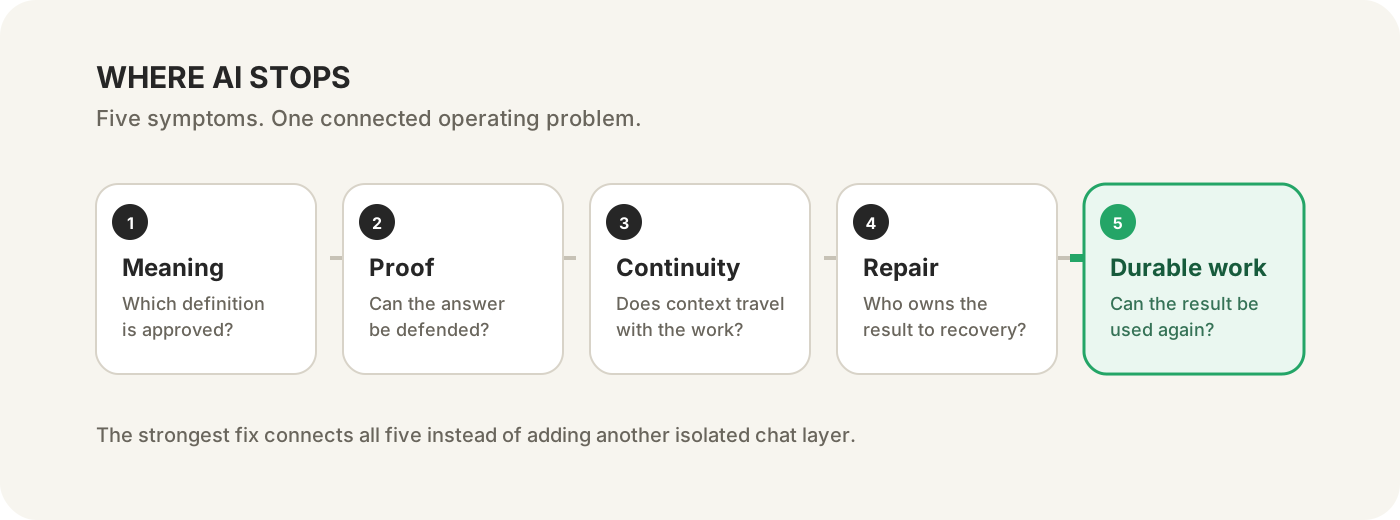
Continue the five-part series
- Part 1: Why AI keeps using the wrong business definition.
- Part 2: How to verify an AI-generated data answer.
- Part 3: Why more MCP servers do not finish the workflow.
- Part 4: Why AI can diagnose a broken dashboard but not repair it.
- Part 5: How to turn AI analysis into a reusable dashboard or workflow.
Or use the five-situation guide to find the stop closest to your team.