What Does a Modern Startup Team Look Like With AI?
The first team should be a few senior outcome owners, AI execution capacity, and accountable expert partners, not a miniature version of every department the company may need later.
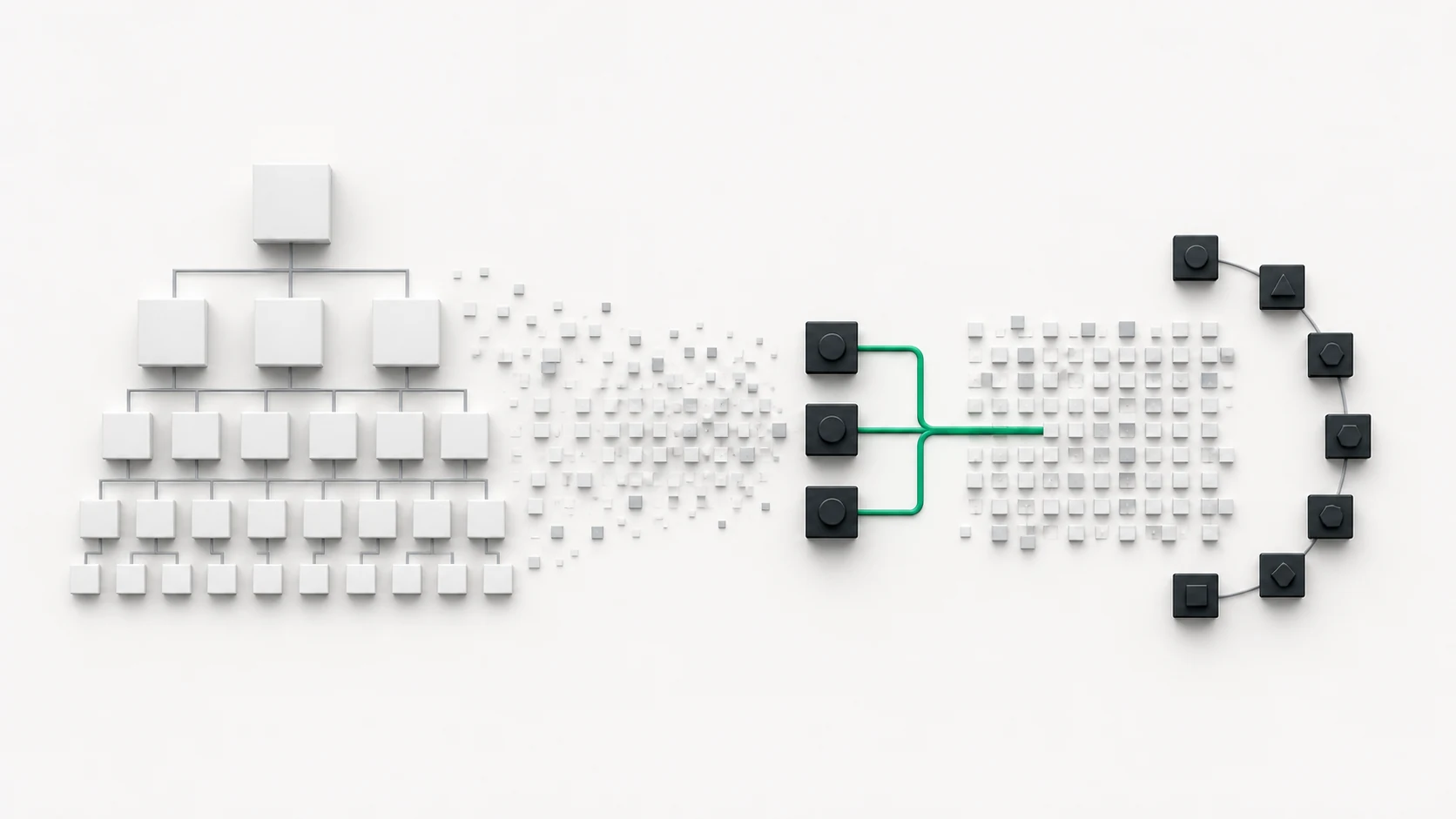
The modern startup team is not a smaller version of the company you plan to become. It is a small group of senior people who own outcomes, AI that supplies much of the first-pass execution, and expert partners who take accountability for work that is too consequential to improvise.
That changes what you need at the beginning.
The familiar startup story began with a CEO and CTO, or a commercial co-founder and a technical co-founder. They raised money, hired engineers, and built the product. As the company grew toward Series A, the org chart filled in: sales, marketing, data, finance, operations, and the managers required to coordinate all of it.
That sequence made sense when implementation capacity was scarce. If you wanted software, you needed people who could write it. If you wanted a polished website, you needed designers and front-end engineers. If you wanted analysis, you hired an analyst and then discovered that the analyst needed a data engineer and a stack of tools.
AI has not made expertise obsolete. It has made a large amount of first-pass production capacity available to the people who already understand the customer and the goal.
That is a very different company-building constraint.
The old sequenceStartups used to hire around the cost of making things
The old org chart was partly an answer to a production problem.
A product idea had to move through product management, design, engineering, QA, and release. A campaign moved through marketing strategy, copy, design, web development, and analytics. A board report moved through source systems, data engineering, modeling, analysis, and presentation.
Each step required a person with a specialized tool. Each handoff created a queue. Growing the company meant funding more parallel capacity and then adding managers to keep the handoffs moving.
Old startup sequence
Raise capital, hire functional specialists, connect their tools and queues, and hope customer context survives the handoffs.
Modern operating model
Put the outcome with the person closest to it, give that person AI execution capacity, and add expert accountability where the work demands it.
AI compresses many of those production steps. OpenAI's early Codex examples included product managers making lightweight code changes with engineering review. Anthropic says Claude Design can help founders, product managers, and marketers create prototypes, decks, landing pages, and marketing collateral, then hand designs to Claude Code for implementation.
The important words are with review and for implementation. The person closest to the problem can carry the work much farther before a handoff. That does not mean the handoff, review, or specialist judgment never matters.
The modern core is a set of owners, not a list of departments
I would begin with three responsibilities. They do not always require three different people.
- 01Product and customer ownerOwns what should exist
Understands the customer problem, chooses what matters, directs the build, tests the experience, and decides what to keep.
- 02Revenue ownerOwns whether the company learns to sell
Stays close to prospects and customers, shapes the story, runs the commercial loop, and returns market truth to the product.
- 03Technical stewardOwns the system when the risk demands it
Sets architecture, security, reliability, permissions, tests, deployment, and the constraints that keep generated work coherent.
One founder may own product and revenue. A technical founder may also own the system. The responsibilities matter more than the titles.
The product owner can now do far more than write requirements. They can research a problem, build a prototype, inspect a preview, create product copy, and revise the experience while the customer context is still fresh. I wrote a separate article about how that product-and-engineering loop changes when one product expert owns the outcome.
The revenue owner can research an account, prepare a meeting, draft a deck, turn call notes into a follow-up, examine the pipeline, and test new positioning without waiting for a marketing department to assemble every artifact. They still have to earn trust, hear what the prospect actually says, and decide which promises the company can keep.
The technical steward may be a co-founder, a senior early engineer, or an experienced partner. A simple software product still needs someone to care about the parts AI does not make cheap: architecture that must survive change, access to production data, security boundaries, failure recovery, migrations, and irreversible customer impact.
AI is execution capacity. It is not accountability.
This distinction matters because it is easy to look at what AI can produce and conclude that the company no longer needs expertise.
That is the wrong conclusion.
OpenAI described an intentionally extreme internal experiment in which a small team drove an agent-authored product by focusing its human work on the environment, intent, constraints, and feedback loops around Codex. The useful lesson is not that every startup should stop writing code. It is that human attention moved toward specifying what should happen, making the system legible, and checking the result.
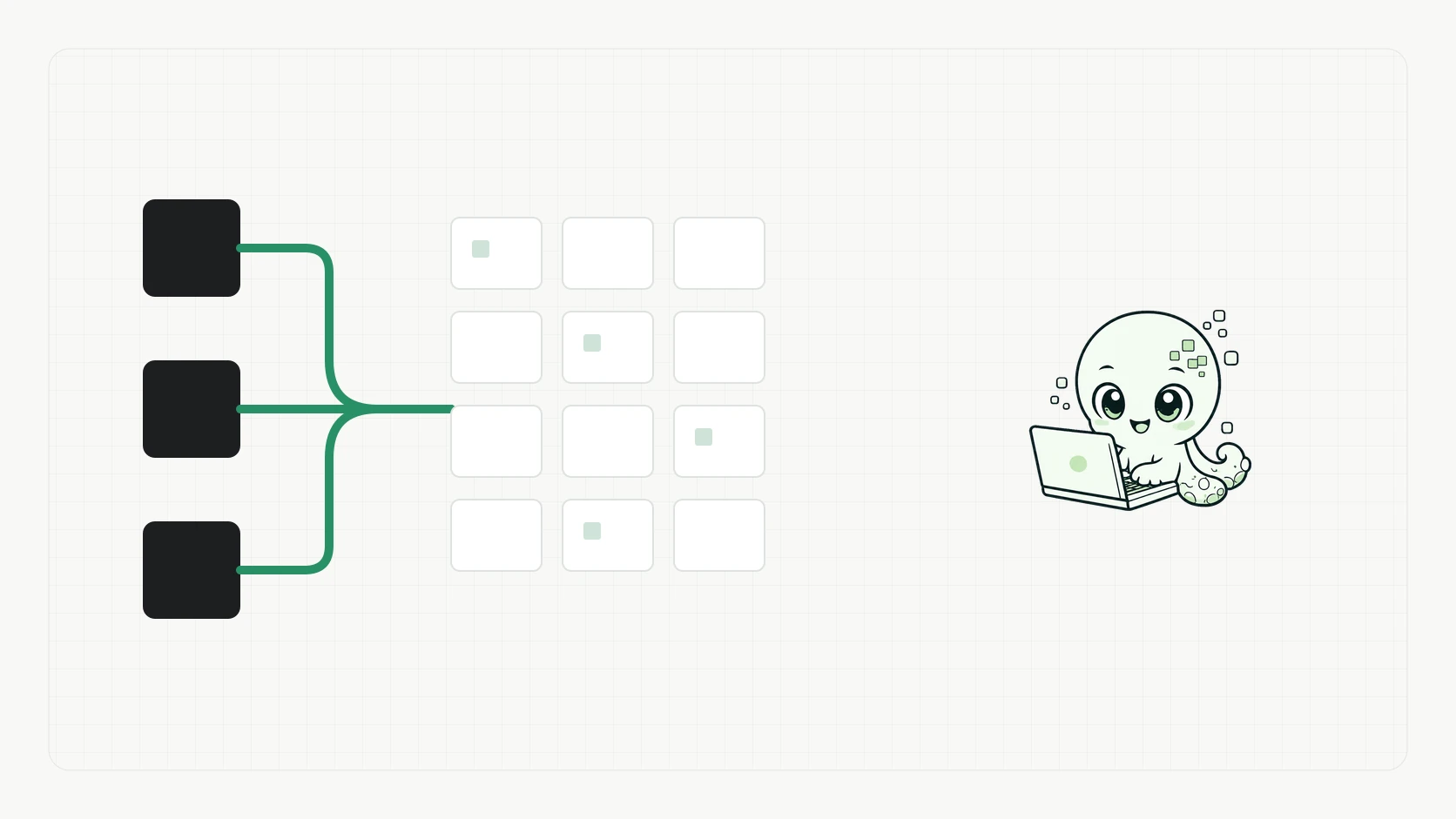
AI can produce code, designs, research, analyses, plans, and operating artifacts. It cannot decide on the company's behalf which customer to serve, which tradeoff is acceptable, which risk is worth taking, or whether the result is true enough to use.
A small team therefore needs fewer people carrying work between tools and more people who can set a standard, direct the work, inspect evidence, and take responsibility when it fails.
The missing layer is often an expert partner, not another tool
There is a second mistake founders can make: using AI to delay every form of outside expertise.
If the work is consequential and the company does not yet have a durable full-time role, an expert partner can be the most modern part of the team.
The best partner is not merely selling hours. They have already combined domain expertise, AI, software, and an operating method. They can do the work, maintain the system around it, face the founders, and remain accountable for what happens next.
Data is the clearest example for me. A founder can connect a coding agent to a spreadsheet, CRM, analytics product, or warehouse and get surprisingly far. But once customer identity, revenue, activation, retention, or an automated decision becomes consequential, somebody must maintain the definitions, inspect the records, notice failed inputs, and repair the path when the AI should not guess.
That does not always justify hiring a data engineer, analyst, analytics engineer, and data leader in sequence. It may justify working with a company that has already put the platform, AI, and expert relationship together. That is why Polyform combines a connected data system with maintained business context and a dedicated expert who meets with the company every week.
We have worked with a company of two people and helped across its MCP server, AI automation, data understanding, metrics, and product work. The interesting part was not that two founders suddenly became five specialists. It was that they could keep owning the product and customer while borrowing a working capability that would have been expensive to assemble internally.
The same pattern can apply to security, finance, legal work, and specialist marketing. Use AI directly when the owner can inspect the work. Bring in an expert partner when the missing ingredient is judgment, maintenance, or responsibility. Hire when the company has discovered a durable internal mandate.
- 01Direct with AIThe owner can review it
Use for bounded, reversible work when someone inside the company understands the context and can test the result.
- 02Add an expert partnerJudgment is scarce; demand is uneven
Use when the work is specialized or consequential but does not yet justify permanent internal ownership.
- 03Hire an internal ownerThe mandate is durable and daily
Use when company-specific decisions, response time, risk, culture, or differentiated capability require a person inside the business.
The progression is not always linear. A strong partner may remain beside an internal owner, and AI should increase the leverage of both.
I can see the change in my own work
At my last company, I had an assistant. Today I use Instinct for parts of that work. Instinct describes itself as a personal assistant that can work across connected applications and devices. That does not mean I have delegated judgment over my life. It means many coordination tasks no longer require a separate human production loop.
I also used to manage separate front-end, design, and marketing-site work. Today I can use Claude Design and coding agents to move from an idea to a design, a working page, and a reviewed change. Anthropic's own examples include designers implementing front-end changes, product teams building prototypes, and marketers creating automation.
What disappeared was not taste. It was not technical responsibility. It was not the need to understand the customer.
A great deal of waiting disappeared.
That is the opportunity for a modern startup. Keep the customer truth and decision-making close to the founders. Use AI to remove the avoidable handoffs. Use expert partners to add mature capability before the work deserves a department. Then hire into a system that already knows what the role is supposed to own.
Hire when ownership becomes the bottleneck
I would open a role when at least one of these conditions becomes true:
- The mandate is durable. There is valuable work every week after the initial foundation is built, not merely a project that needs to be completed once.
- The decisions must live inside the company. The role needs daily access to product strategy, customer tradeoffs, confidential context, or internal authority that should not be rented.
- The cost of delay or failure is too high. Reliability, security, regulation, incident response, or customer commitments require immediate internal ownership.
- The capability is becoming part of the advantage. The company needs to compound its own method, culture, architecture, or domain expertise rather than consume a good external capability.
For data specifically, I would first ask how far the company can get while it can still verify the answers. When the role becomes durable, the next question is which senior, product-minded data owner the company actually needs.
Do not hire because the old startup playbook says a Series A company should have a data team, a marketing team, or a larger engineering organization.
Hire because there is now an important result that deserves a permanent owner.
Until then, the strongest early team may be much smaller than the org chart in your fundraising deck, and much more capable than its headcount suggests.