How to Transform a Service Company With AI
The practical path is not to replace every tool or launch disconnected AI pilots. It is to connect the work, make the process measurable, and automate from a trusted data foundation.
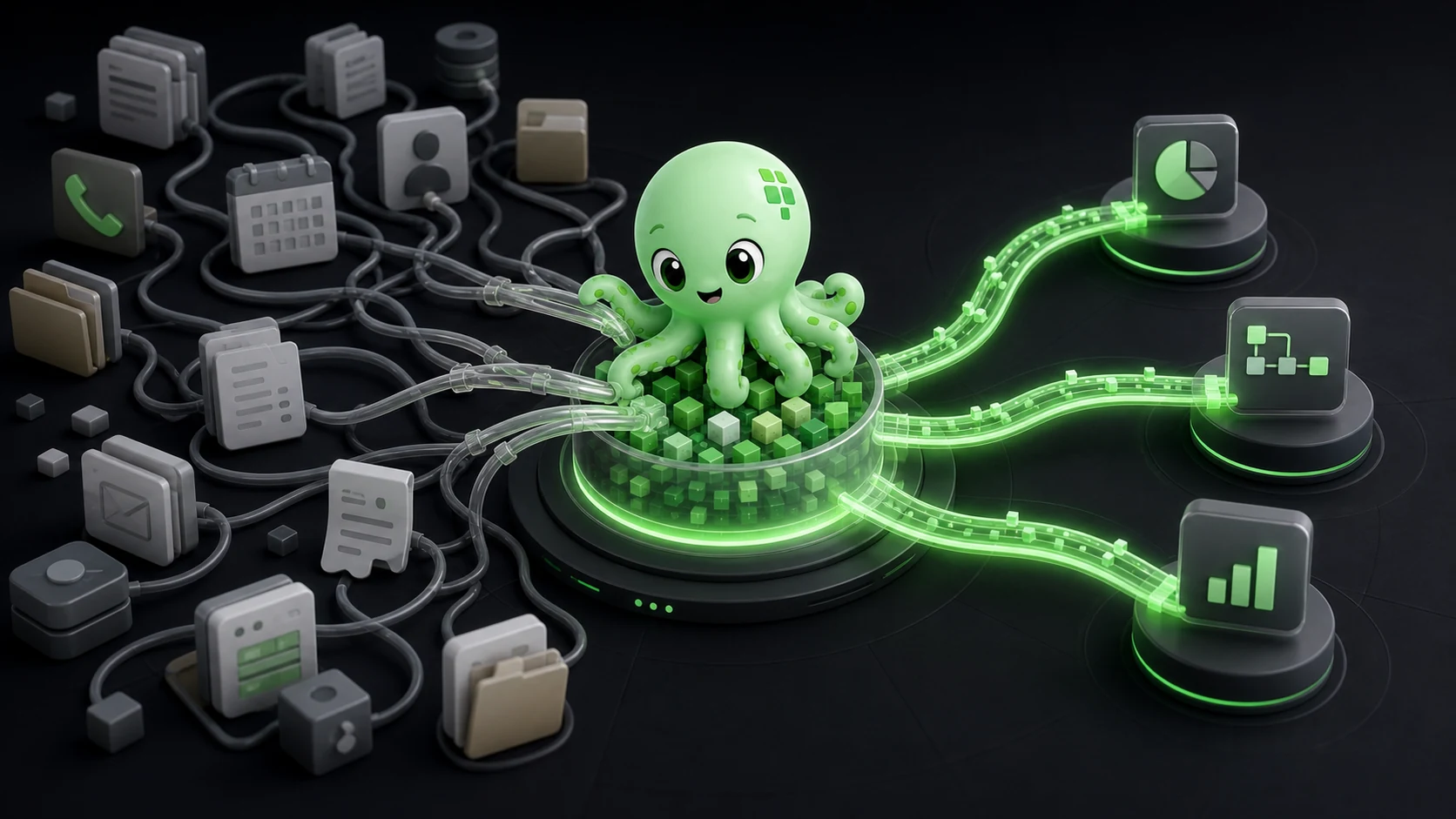
If you want to transform a service company with AI, start by making the work visible. Assess how information moves through the business, connect the important data in a warehouse, define what each step means, and automate one bounded part of the process. Do not begin with a company-wide tool migration or a collection of AI assistants.
This matters especially in a private-equity-backed service business. There is often a clear value-creation thesis and real pressure to move. But the operating company may also have years of acquired systems, local processes, spreadsheets, documents, and workarounds. The company does not lack software. It lacks a reliable way to see how work moves from an input to an outcome.
That is the real transformation problem.
Why AI transformation is different in a service company
In a software product, much of the work already happens inside a system. In a service company, the work is often spread across people and tools. A request arrives by phone or email. Someone copies the details into a CRM. Another person schedules the work. A specialist completes it. Finance creates an invoice. An account manager follows up. Leadership sees the result later in a report assembled from several systems.
Every handoff has context. There are exceptions, approvals, documents, conversations, and definitions that live in people’s heads. Two offices may use the same CRM differently. An acquisition may bring a second CRM. A spreadsheet may contain the only dependable version of a key operating rule. A shared drive may hold the evidence that explains why a transaction looks the way it does.
This is why buying an AI tool is not the same as transforming the business. The tool can generate an answer, draft a message, or automate a task. It cannot, by itself, decide which system is correct, reconcile definitions, expose a broken handoff, or determine whether the business outcome improved.
Start with an operating assessment, not an AI wish list
The first step is a short, evidence-based assessment of one important workflow. Do not begin by asking every department for possible AI use cases. You will get a long list of ideas with no shared view of the underlying process.
Pick one workflow that matters to the investment thesis or operating plan: lead to booked job, request to completed service, claim to resolution, order to cash, technician visit to invoice, or customer issue to renewal decision. Then trace it from beginning to end.
For that workflow, document:
- where the work begins and what a completed outcome means;
- which people and systems touch it;
- where information is copied, re-keyed, emailed, exported, or reconciled;
- which definitions conflict and which exceptions require judgment;
- what leaders currently measure, and whether those measures are trusted;
- what must remain under human review.
This produces something more useful than a generic maturity score. It gives you a map of the current operating system, a view of implementation risk, and a first candidate for improvement.
Why data integration is unusually hard in service businesses
The challenge is not simply that there are many tools. It is that each tool sees only one part of the service.
The CRM knows the opportunity. The scheduling system knows the appointment. The service platform knows the work performed. The billing system knows the invoice. The support inbox knows the exception. The document store knows the contract. None of them necessarily knows the complete customer or operating outcome.
Service businesses also contain a lot of unstructured context. A document, call note, or message may explain a delay that appears inexplicable in the transaction data. The same customer may have different identifiers across acquired systems. Teams may use different words for the same event, or the same word for different events.
AI makes these inconsistencies more consequential. When a person reads a strange record, they may notice that something feels wrong. An automated system can move the wrong interpretation faster.
Before you automate the work, you need a place to connect the evidence and define what the business actually means.
Use a warehouse-first approach
A data warehouse gives you the best of both worlds.
First, it gives the company one place to bring together data from the CRM, finance system, service platform, marketing tools, operational databases, and selected document-derived data. You can preserve the raw inputs, connect identities across systems, model the important activities, add shared definitions, and create a dependable view of the workflow.
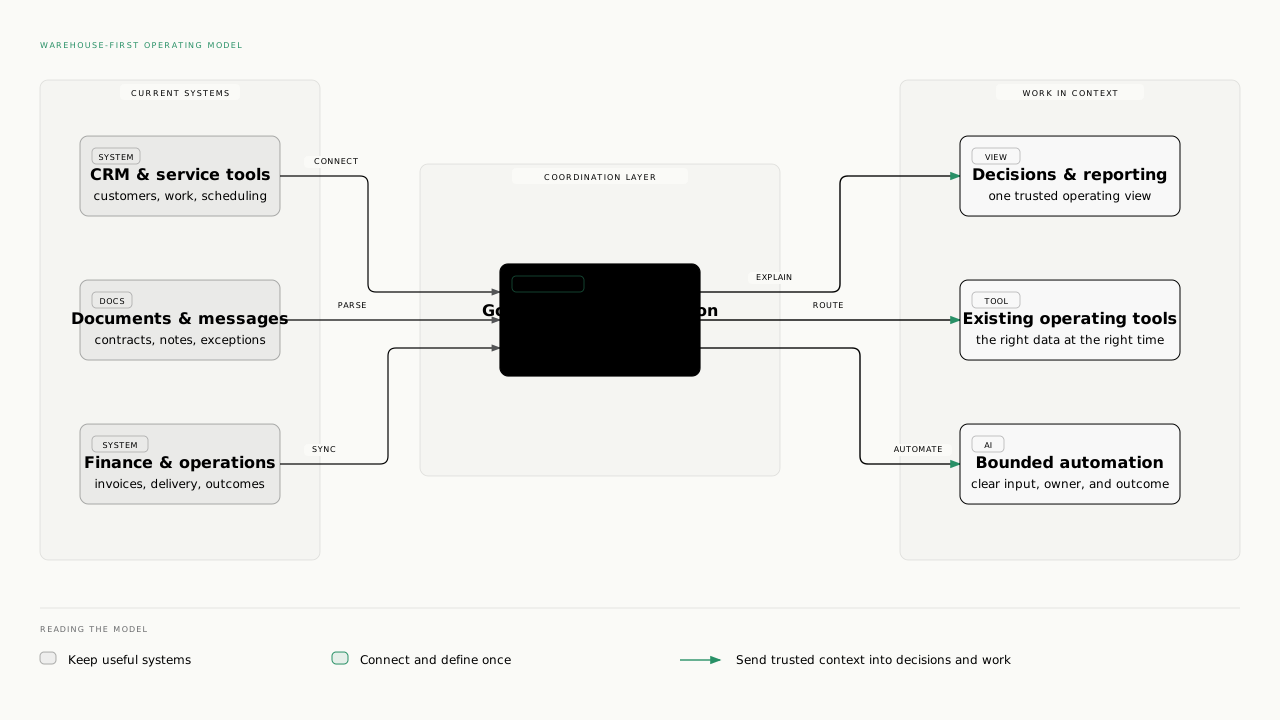
Second, it lets you improve the operating system without forcing an immediate tool migration. The warehouse becomes a coordination layer. Existing systems can keep doing the jobs they do well while trusted data is sent to the right person or application at the right time.
Warehouse-first does not mean warehouse-only. People will still work in the CRM, scheduling system, service application, and communication tools. The goal is to stop asking those people to be the integration layer.
A warehouse also preserves optionality. Once the company can see which systems are duplicative, which ones create manual work, and which ones remain valuable, leaders can consolidate deliberately. A system-inventory exercise—whether managed in a portfolio tool such as Simplify or a well-maintained operating table—can help identify overlap. But the decision to remove a tool should follow evidence from the workflow, not precede it.
The data pipeline becomes a map of the business process
Once the data is connected, a pipeline is no longer just technical plumbing. It becomes a visible explanation of how the company operates.
Imagine that the company sends a scored account and a recommended next action into Salesforce. The important question is not whether the integration ran. The important questions are why the company sent that information, who used it, what action followed, and whether the expected outcome changed.
Did the account receive a meeting? Did the meeting happen sooner? Did the opportunity convert at a different rate? Did the team ignore the recommendation? Was the definition of a qualified account consistent across business units?
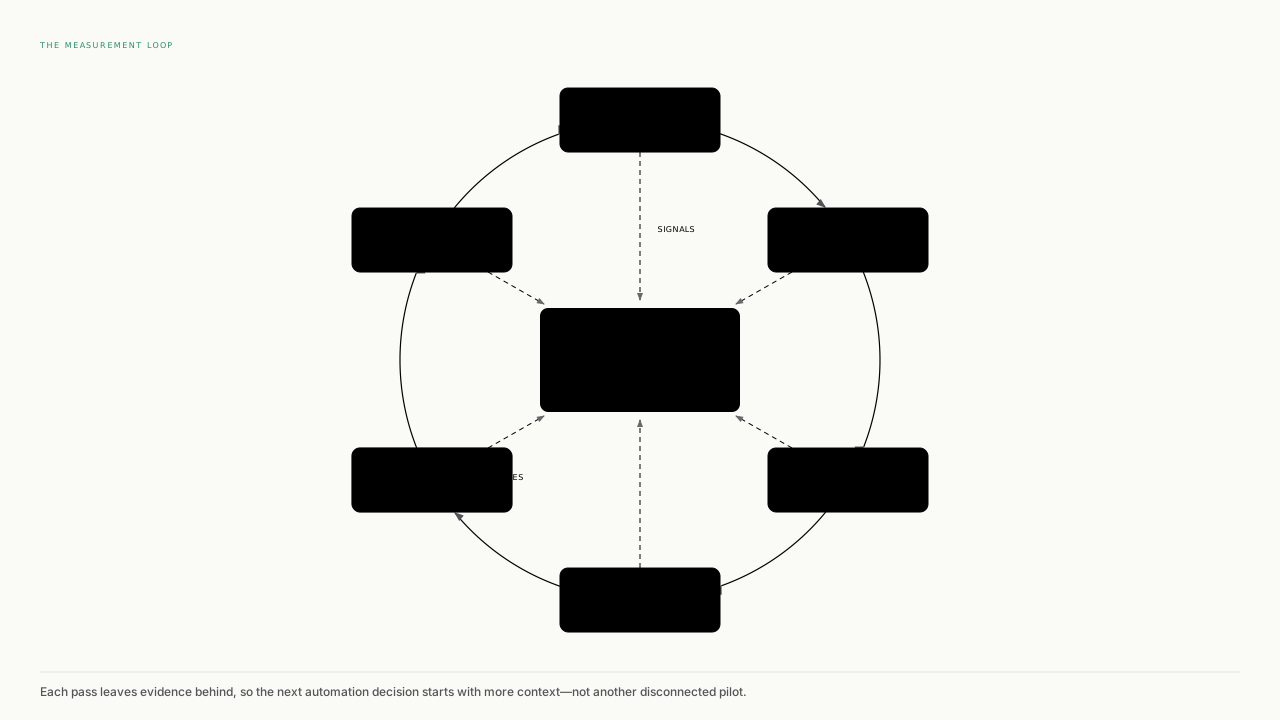
When the warehouse contains the activities before and after the intervention, the company can inspect the complete loop. That is the analytical capability a serious AI program needs. It is also how operators separate a demo from an operating improvement.
At Polyform, we use an Activity Schema approach for this reason: define an important business activity once, then reuse that governed definition across reporting, investigations, operational workflows, and AI. The AI does not receive an unexplained pile of records. It receives the business context needed to do useful work.
Automate one bounded step, then measure the loop
After the workflow is observable, choose one step where automation can produce a useful result without pretending to replace the whole operation.
A good first step has a clear input, a clear output, enough repetition to matter, and an obvious human owner. It might classify inbound requests, assemble the context for a service appointment, prepare a renewal review, identify missing documentation, or route an exception to the right person.
Then measure the entire loop:
- Was the required input available and trustworthy?
- Did the system produce the intended output?
- Did the person or downstream system use it?
- Did the operating outcome improve?
- What failed, and can the team trace the failure to a source, definition, model, or workflow?
This is how the data foundation and the AI program reinforce each other. Connecting the workflow makes automation possible. Running the automation produces new evidence about the workflow. That evidence tells you what to improve next.
A practical first-100-day sequence for private equity
The exact timing depends on the company, but the sequence should remain stable.
During diligence or immediately after close: establish the baseline
Inventory the systems, owners, critical definitions, reporting dependencies, manual handoffs, and known failure points around one value-creation priority. Identify data access constraints and implementation risks. The output is a realistic plan tied to an operating outcome, not an AI score.
First 30 days: connect the minimum useful data
Bring the required source data into the warehouse, reconcile identifiers, preserve lineage, and define the core activities. Do not wait for every system or every historical field. Build the smallest dependable view that can support the first decision or workflow.
Days 31–60: make the workflow visible
Deliver a trusted operating view that leaders and process owners can use. Validate definitions with the people who do the work. Establish the baseline measures and expose where delays, rework, or missing information actually occur.
Days 61–100: automate one step and inspect the result
Put one bounded workflow into production with a named owner, human-review rules, failure handling, and outcome measurement. Expand only after the company can show that the loop works.
Large private-equity firms that have built internal AI capabilities describe the work as a close partnership with portfolio companies, not a software drop. Blackstone, for example, describes its data-science team working directly with portfolio companies on AI strategy and integration. Most middle-market companies will not build that capability at the fund level, but the operating principle is the same: transformation needs accountable implementation, not a slide deck and a set of licenses.
What not to do
Do not start by replacing every tool
A company-wide migration consumes attention, creates adoption risk, and can delay the first useful result. Keep the systems that are working. Use the warehouse to connect them. Consolidate later when the evidence is clear.
Do not automate a process nobody can explain
If the team cannot agree on the input, decision, owner, exception path, and outcome, an agent will not resolve the ambiguity. It will encode it.
Do not measure activity and call it value
Messages drafted, records classified, and tasks completed are useful operating measures. They are not the business result. Connect them to cycle time, conversion, utilization, quality, revenue, retention, or the specific outcome the investment thesis requires.
Do not assume another internal data team is the first move
An internal team can be the right long-term owner when data capability is core to the business and the work is large enough to sustain it. But asking a newly hired leader to discover the systems, negotiate every definition, build the platform, deliver the first workflow, and establish the operating model is a very expensive way to learn the scope.
The first move should be to make the problem concrete. Then decide what the company should own, what an existing team should continue to own, and where an accountable implementation partner is the faster and safer choice.
Frequently asked questions
What is the first step in transforming a service company with AI?
Assess one important workflow from input to outcome. Map its people, tools, data, definitions, manual handoffs, exceptions, and current measures before selecting an AI use case.
Why start with a data warehouse?
A warehouse connects data from existing systems, preserves history and lineage, creates shared business definitions, and supports both analytics and operational automation without requiring an immediate tool migration.
Do we need to consolidate our software before using AI?
No. Keep useful systems in place, connect their data, and observe the complete workflow. Consolidate only when the evidence shows that overlap or manual work justifies the change.
Which process should we automate first?
Choose a repeated, bounded step with a clear input, output, human owner, and measurable downstream result. Avoid beginning with an end-to-end process whose definitions and exception paths are still disputed.
Should a portfolio company hire its own data team?
Sometimes. The decision should follow the assessment. A company may need an internal owner, a strengthened existing team, an accountable external team, or a transition between those models. Do not make the hire itself the transformation plan.
The goal is not more AI. It is a better operating system.
A service company becomes easier to automate when its work becomes easier to see. The warehouse connects the evidence. Shared definitions make the process understandable. Measurement tells you whether the intervention worked. AI can then complete a bounded task within the loop, while the accountable team retains responsibility, reviews important outputs, repairs failures, and improves the system over time.
That is the path from fragmented tools and manual handoffs to an AI-enabled operating company. Not one giant migration. Not another disconnected assistant. One important workflow, made visible and improved end to end.